10 Movies Every Christian Man Should Watch
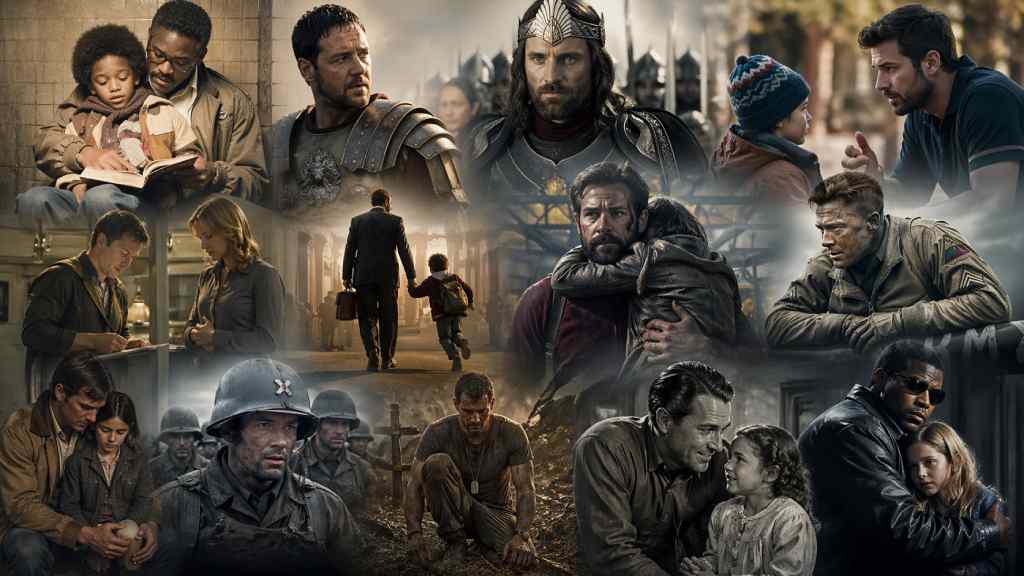
I wanted to put together a list of films that showcase something increasingly rare today: what it means to be a strong Christian man. I wanted films that, in different ways, highlight good leadership, strong fatherhood, faithful husbandry, steadfast conviction, class, integrity, and a kind of masculinity that is not childish, reckless, or crude, but grounded, durable, and respectable. In a time when manhood is either mocked, softened, or distorted into something ridiculously fleshly and foolish, it is worth pointing to stories that still give us glimpses of courage, sacrifice, honor, and responsibility.
To be clear, these are not necessarily my favorite films of all time. They are not simply the greatest “guy movies,” nor are they just a list of the biggest epic films, war films, or action classics. This is a more specific list than that. These are movies that, whether Christian or secular, do a particularly strong job of putting certain masculine virtues on display, the kind that Christian men should recognize, admire, and measure against Scripture.
Please keep in mind that none of these movies is the standard. Christ is. But good stories can still help us see reflections of truth, and wise men know how to recognize those echoes when they appear.
1. Courageous (2011)
This well-written film by the Kendrick Brothers goes straight for the core issue most men avoid: responsibility before God. It does not dress it up. It does not soften it. It puts it right in front of you and asks a simple question. Are you leading your home, or are you drifting?
What makes Courageous land is that the men in the story are not heroic by default. They are distracted, passive, and compromised. In other words, they look like most men. Then conviction hits, and they have to decide whether repentance will actually change anything.
That is where the film becomes useful. It shows that leadership is not a personality trait. It is obedience. Joshua 24:15 is not a slogan. It is a line in the sand. A man chooses, and then he acts.
A Christian man cannot outsource the spiritual direction of his home. This movie reminds him of that in a way that is hard to shake.
2. The Pursuit of Happyness (2006)
There is something deeply revealing about a man when everything is taken from him. Comfort, stability, reputation, money. Strip it all away, and what remains is who he really is.
The main character, Chris Gardner, portrayed by Will Smith, refuses to abandon his son, even when life collapses. He keeps showing up, keeps working, keeps believing that provision matters. Not in theory, but in action.
Scripture consistently ties love to endurance. Not feelings and not intentions, but perseverance. He is a father who stays, and a man who keeps going.
Many men want to lead when things are easy. This film shows what leadership looks like when it is not. It is gritty, quiet, and often unseen. But it is real.
3. Gladiator (2000)
General Maximus Decimus Meridius (Russell Crowe) lives in a Roman world soaked in corruption, betrayal, and power hunger. He loses everything that would have justified him in becoming bitter or ruthless. His family is taken from him, his position stripped away, and his life reduced to survival. By every human measure, he has every reason to give himself over to rage. Yet even in that loss, he does not fully surrender his integrity.
That is what makes this film valuable. Strength without character is dangerous. Power without restraint destroys. Maximus is a warrior, but he is not a savage. He has skill, discipline, and authority, but those things are tethered to a moral framework that he does not completely abandon, even when the world around him collapses.
He carries grief, anger, and loss, and the film does not pretend otherwise. Those emotions are real, and they are heavy. But they do not entirely redefine him. He continues to show restraint, loyalty to what is right, and a sense of justice that goes beyond personal gain. He treats others with dignity, earns the respect of those under him, and refuses to become like the corrupt system he is trapped in.
This raises an important question for a Christian man: What about revenge? Should Maximus be seeking it? On a human level, his desire for justice is understandable. What was done to him was evil. Scripture never asks us to pretend that evil is acceptable or insignificant. But it does draw a clear line when it comes to personal vengeance.
Romans 12:19 says, “Beloved, never avenge yourselves, but leave it to the wrath of God, for it is written, ‘Vengeance is mine, I will repay, says the Lord.'” That is not weakness. That is trust. It means a man refuses to take ultimate justice into his own hands because he believes God sees rightly and judges perfectly.
Maximus walks a tension that many men will recognize. He longs for justice, but he lives in a world where justice has been corrupted. At times, his actions lean toward personal revenge, and that is where the film moves away from a fully biblical model. A Christian man has to be able to recognize that. Justice and vengeance are not the same thing, and Scripture calls men to entrust final judgment to God.
At the same time, there are elements in Maximus that reflect something true. He does not pursue power for its own sake. He does not exploit the weak. He does not abandon his sense of right and wrong simply because he has been wronged. He continues to act with honor in a dishonorable world, and that matters.
Romans 12:21 calls men to “overcome evil with good.” That is not theoretical. It is costly. It means absorbing wrong without becoming defined by it. It means refusing to let sin reproduce itself through you. This film gives you a picture, however imperfect, of what that kind of costly integrity can look like when everything has been taken away.
4. Fireproof (2008)
Marriage exposes a man faster than almost anything else. It reveals selfishness, impatience, pride, and emotional distance. It brings to the surface things a man can hide in other areas of life. He can be respected at work, competent in public, even admired in certain circles, and still be failing in the place that matters most. This film does not pretend those things are small. It puts them under a spotlight and forces you to look at them without excuses.
The movie’s main character, played by Kirk Cameron, begins as a husband who believes he is justified in his behavior. In his mind, he is reacting to his circumstances. He feels wronged, misunderstood, and unappreciated in his marriage, so he withdraws, hardens, and turns inward. That pattern is far more common than most men are willing to admit. Over time, he is confronted with a deeper truth. Love is not something you wait to feel. It is something you choose, then practice, even when everything in you resists it.
What makes this powerful is that change does not happen overnight. It is intentional. It is disciplined. It requires humility, and that is where many men struggle. He has to face the reality that he is not the victim he thought he was. He has contributed to the breakdown. That kind of self-examination is uncomfortable, but it is necessary if anything is going to be restored.
Ephesians 5 is not sentimental, but instead is sacrificial. A husband is called to lay himself down for his wife – not when she deserves it, not when it feels easy, but because Christ did it first. Christ loved while we were still sinners and when we were as uninterested in Him as possible. He moved toward us when we were unlovely, distant, and undeserving. That is the model, and it leaves no room for conditional love.
This film also shows that leadership in marriage is not about control. It is about initiative. It is about stepping forward when things are broken and choosing to do what is right regardless of the response. That takes strength. Not the loud, aggressive kind, but the steady, enduring kind that continues to act in love even when it is not immediately returned.
In the end, this movie forces a man to examine himself honestly. Is he loving his wife in a way that reflects Christ, or is he simply coexisting under the same roof? Is he leading with humility and sacrifice, or waiting to be served? It draws a clear line between passive presence and active, Christlike love, and it leaves the viewer with a decision to make.
5. A Quiet Place (2018)
There are very few speeches in this film, and that is part of its strength. Leadership is not always loud. It is not always expressed in big, dramatic moments or long explanations. More often, it is demonstrated through a steady, consistent, and protective presence. A man shows what he believes by how he lives, not just by what he says.
It is worth noting up front that A Quiet Place is a sci-fi and horror film. Yes, be prayerful to see if this is a flick you should watch as a believer (let alone as a family). Some men may choose to avoid that genre altogether, and that is a matter of personal conviction and wisdom. But if one is able to watch it with discernment, there are clear and admirable lessons to be seen in the father’s role within the story.
The father, played by John Krasinski (who also directed the movie), is constantly thinking ahead. He is written as a smart and resourceful man who, along with his smart and resourceful wife (portrayed by Krasinski’s real-life wife, Emily Blunt), teaches their children, prepares them for danger, and builds an environment where they can survive and grow even in a hostile world. He, as a father and leader, does not check out. He does not drift. He is present, engaged, and intentional. That alone sets him apart from the passive model of lazy, dumb, slobbish fatherhood that is so common today.
What stands out even more is how he carries responsibility. He absorbs fear, so his children do not have to carry it in the same way. He bears weight quietly. He makes decisions that prioritize their well-being over his own comfort. This is not flashy leadership. It is faithful leadership, and it is often unseen by anyone outside the home.
There is also a tenderness to his strength. He corrects, teaches, and protects, but he also cares deeply. He is not distant or cold. He is invested in his children, both in their safety and in their hearts. That balance of strength and compassion is something many men struggle to maintain, yet it is essential for biblical fatherhood.
That is the shape of biblical love. Not dominance, not control, but sacrifice. A man who absorbs cost for the sake of those entrusted to him. A man who steps forward when it matters and takes responsibility seriously, even when it is difficult.
John 15:13 becomes visible here. “Greater love has no one than this, that someone lay down his life for his friends.” In this film, love is not defined by words. It is defined by action. It is seen in what a man is willing to give up so that others can live.
6. Hacksaw Ridge (2016)
Protagonist Desmond Doss (Andrew Garfield) stands out because he refuses to bend where it matters. In a culture that demands conformity, he holds his ground.
What makes director Clint Eastwood’s story so powerful is not just that Doss believes something. It is that he acts on it under pressure. Faith that never costs anything is rarely real.
Doss walks into war without a weapon and becomes one of the bravest men on the battlefield. Not by killing, but by saving.
His prayer, asking God for one more man to rescue, captures the heart of service. It reflects a life that is not centered on self, but on others.
7. The Lord of the Rings: The Return of the King (2003)
Let’s take just one of the many characters from this film, Aragorn. He is a rare kind of leader. He does not rush into power. He grows into it. Aragorn hesitates, wrestles, and ultimately accepts responsibility when the time comes.
That pattern matters. Many men want authority without formation. They want the position without the weight.
Aragorn leads by serving, protecting, and stepping forward when others hesitate. His authority is rooted in character. Jesus taught that greatness is found in service, and this film gives a compelling picture of that truth lived out in a king.
But The Return of the King is not only about kingship and leadership. It is also about friendship, brotherhood, loyalty, and honor. To mention a couple of other characters, Samwise and Frodo, who have one of the clearest pictures in modern film of steadfast friendship and brotherly love under crushing burdens. Sam stays when things get dark. He carries hope when Frodo is fading. He bears the weight that is not technically his because love does that. There is something deeply Christian in that kind of brotherhood.
The whole of the excellent Lord of the Rings series is filled with themes Christian men should recognize: humble service, courage in the face of overwhelming darkness, honoring one’s word, protecting the weak, and persevering when the task seems impossible. This is one of the reasons the film resonates so deeply. It understands that strength is never merely physical. True strength is moral, relational, sacrificial, and enduring.
I plan to dig into the Lord of the Rings movie series in greater detail very soon, or stay tuned!
8. Saving Private Ryan (1998)
This Steven Spielberg film is heavy. It is not easy to watch, and it is not meant to be. War strips away illusions and reveals the cost of sacrifice in a brutal way. It is tough, violent, realistic, and blunt.
Tom Hanks’ character Captain Miller leads men through chaos with steady resolve. He is not perfect, but he carries the burden of leadership seriously. Every decision costs lives.
The line “earn this” at the end hits hard because it raises a question about how a man lives in light of sacrifice made for him.
For a Christian, that question goes deeper. Christ laid down His life. How does a man respond to that? With indifference, or with a life that reflects gratitude and purpose, and being a “living sacrifice” (Romans 12:2) for Him?
9. It’s a Wonderful Life (1946)
Frank Capra’s It’s A Wonderful Life is more than just a shmaltzy, feel-good Christmas movie.
This film slows everything down and brings a man face-to-face with the value of his life.
George Bailey feels trapped, overlooked, and unsuccessful. He measures himself by what he has not achieved. That is a trap many men fall into. The film also paints Bailey as a flawed man, succumbing to frustration, stress, and anger, and even lashing out at his family.
Over time, it becomes clear that his quiet faithfulness, his sacrifices, his overall love for his family, and his care for others have had a far greater impact than he realized.
Scripture consistently elevates faithfulness over visibility. A man who quietly does what is right, over and over again, is building something that lasts.
This film reminds a man that his life matters, even when the world does not applaud it.
10. Man on Fire (2004)
This one needs to be handled carefully (this Denzel Washington vehicle is not for everyone, nor are all of the principles biblical), but there is something worth seeing here.
Washington’s character John Creasy begins as a broken man. He is cynical, drifting, and empty. Over time, through relationships and responsibility, he begins to change.
What stands out is Creasy’s willingness to lay down his life for someone else. That transformation from self-centered to self-sacrificing is significant.
There are elements of vengeance in this film that do not align with Scripture, and that needs to be acknowledged. But the arc of redemption, sacrifice, and love points to something deeper.
A man who was lost becomes a man who gives himself for another. That echoes a truth that finds its fullness in Christ.
Final Thoughts
A man is always being formed by what he watches, what he listens to, what he allows into his mind, and what he meditates on. That is not optional. It is constant.
The question is not whether culture shapes him. The question is whether he is aware of it, and whether he filters it through the truth of God’s Word.
These films, in different ways, put pieces of biblical manhood on display. Responsibility. Sacrifice. Integrity. Endurance. Leadership. Faith. Friendship. Brotherhood. Honor. Steadfast love.
But none of them is the standard.
Christ is.
Every one of these examples falls short at some point. Some fall short in major ways. That is why a Christian man does not imitate movies. He evaluates them. He takes what aligns with Scripture. He rejects what does not. And then he fixes his eyes on the One who perfectly lived what all of these stories only hint at.
Jesus Christ is the true and better example of manhood. Perfect strength. Perfect humility. Perfect obedience. Perfect love.
If a man wants to become what he was created to be, he does not start with a screen.
He starts with the Word.
Final Thoughts
What do you think? Are there any movies – Christian or secular – that portray men as good leaders, fathers, husbands, or brothers? Let us know about them in the comments below!