The Importance of Spiritual Discernment
Spiritual discernment has always been essential for the people of God, but it is especially important in an age of endless information. Christians now encounter social media teachers, sermons, podcasts, videos, books, worship music, motivational speakers, and spiritual advice almost every day. Some of it is definitely faithful and helpful. A lot of it contains a mixture of truth and error. And a good deal of it openly contradicts the Word of God while still using Christian language.
The danger is that false teaching rarely introduces itself honestly. It does not usually say, “I am here to lead you away from Christ.” It often speaks about faith, blessing, purpose, freedom, love, healing, success, or spiritual power. It may quote the Bible. It may mention Jesus. It may produce strong emotions and seem to be super spiritual. It may even appear to change people’s lives.
This is why believers need spiritual discernment.
Discernment is the God-given ability to recognize the difference between truth and error, wisdom and foolishness, and righteousness and sin. In fact, discernment that is mature and well-developed can detect tiny amounts of error mixed in with what is mostly true; as pastor Charles Spurgeon once famously said, “Discernment is not knowing the difference between right and wrong; it is knowing the difference between right and almost right.”
Discernment enables us to evaluate teaching, experiences, influences, and decisions according to the Word of God. A discerning Christian does not accept an idea merely because it sounds spiritual, feels encouraging, or comes from a popular teacher. He asks whether it squarely lines up with Scripture and is consistent with the gospel of Jesus Christ.
Every single Christian needs to grow in this area; discernment is not a special interest reserved for pastors, theologians, or people who enjoy studying false religions. It is part of universal Christian maturity.
Why Spiritual Discernment Matters
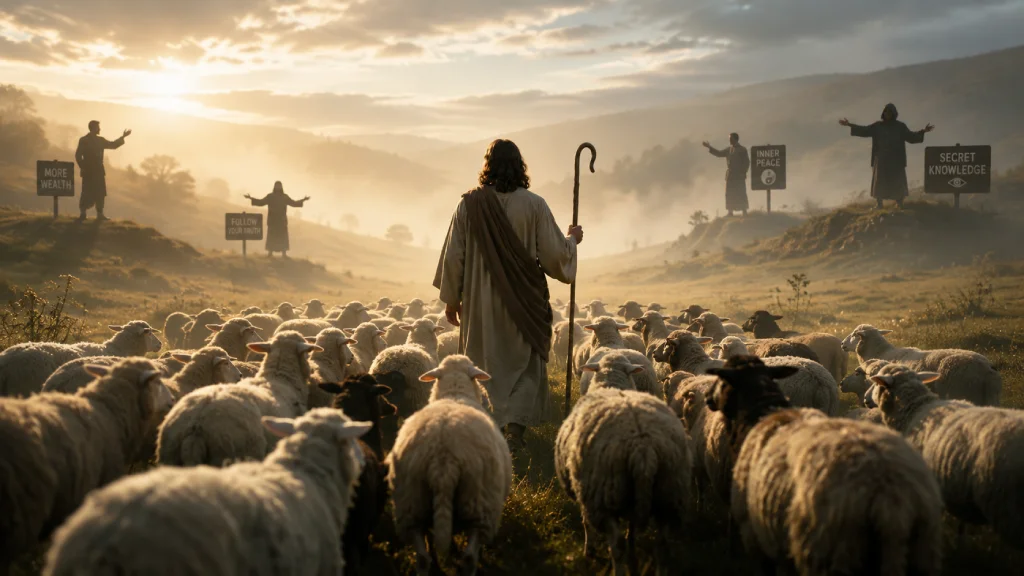
The Bible repeatedly warns believers about deception. Jesus told His disciples that false prophets would come in sheep’s clothing while inwardly being ravenous wolves (Matthew 7:15). Paul warned that savage wolves would enter the church and that some men would distort the truth in order to draw disciples after themselves (Acts 20:29-30). John instructed Christians not to believe every spirit, but to test the spirits because many false prophets had gone out into the world (1 John 4:1).
These warnings were given to churches in the first century, but they remain deeply relevant today.
False teaching is dangerous because all ideas have consequences. What we believe about God shapes how we worship Him. What we believe about Christ shapes how we understand his character and salvation. What we believe about sin shapes how seriously we pursue holiness, our view of God, and our view of ourselves. What we believe about the Bible determines whether we submit to God’s authority or place ourselves above it.
A small doctrinal error can eventually produce serious spiritual damage. For instance, if someone believes that God’s main purpose is to make him wealthy, he may begin to judge God’s faithfulness and blessings by what’s in his bank account. If someone believes that all religions are different paths to the same destination, he will no longer see the need to share the Gospel of Jesus Christ. If someone believes that personal feelings are more reliable than Scripture, he may attribute sinful desires to the “promptings” of the Holy Spirit.
Discernment protects the church from these errors. It also protects individual believers from manipulation, confusion, spiritual pride, and unnecessary fear.
Paul prayed that the Philippian believers would grow in love “with knowledge and all discernment” so that they could approve what is excellent (Philippians 1:9-10). Biblical love does not require us to ignore error. Genuine Christian love cares about truth because truth brings life, exposes lies, and points people to Christ.
Discernment Begins With the Word of God
The foundation of spiritual discernment is a growing knowledge of Scripture.
Hebrews 5 describes mature believers as those who have their powers of discernment trained by constant practice to distinguish good from evil. This maturity does not appear overnight. It develops through repeated exposure to God’s truth and repeated obedience to what God has revealed.
A believer who rarely reads the Bible will be vulnerable to anyone who quotes a few verses confidently. He may recognize biblical words without understanding their biblical meaning. Words such as faith, blessing, anointing, kingdom, purpose, grace, and freedom can be used in ways that sound Christian while carrying an entirely different message.
Consider how people learn to recognize counterfeit money. They do not begin by studying every possible counterfeit. They study genuine currency carefully. The more familiar they become with the real thing, the easier it becomes to identify something false.
Christians must become deeply familiar with the truth of Scripture. This means reading whole books of the Bible rather than surviving on isolated verses. It means considering the context, the author’s purpose, and the way each passage fits within the whole message of Scripture. It means learning the central doctrines of the faith, including the character of God, the person and work of Christ, the seriousness of sin, justification by faith, sanctification, the church, and the return of Christ.
Scripture is able to make us wise for salvation and equip us for every good work (2 Timothy 3:15-17). God has not left His people without a reliable standard. Our feelings change. Cultural values shift. Popular teachers rise and fall. The Word of the Lord stands forever.
Discernment Requires Humility
Head knowledge alone does not make someone discerning. A person can know many theological terms and still be proud, harsh, careless, or easily deceived. True discernment requires heavy doses of Holy Spirit-created humility.
Pride makes us vulnerable because it tells us that we cannot be fooled. It encourages us to trust our intelligence, instincts, experiences, or theological group. A proud Christian may carefully examine the errors of others while refusing to consider his own weaknesses.
The Bible warns, “Let anyone who thinks that he stands take heed lest he fall” (1 Corinthians 10:12). We should approach spiritual questions with confidence in Scripture and caution about ourselves.
Humility also makes us teachable. A discerning believer is willing to receive correction from faithful pastors and mature Christians. He does not treat every disagreement as a personal attack. He listens carefully, studies patiently, and changes his mind when Scripture proves him wrong.
This is one reason active involvement in a healthy local church is so important. God has given pastors and elders the responsibility to teach sound doctrine and guard the flock. Christians who separate themselves from the local church often become more vulnerable to strange teachings. They may listen to dozens of online voices while remaining unknown and unaccountable in real life.
Discernment grows within the ordinary life of the church through preaching, fellowship, correction, prayer, the Lord’s Supper, and relationships with mature believers.
Watch Out for the Prosperity Gospel
One of the most widespread distortions of Christianity is the prosperity gospel. This teaching claims, in various forms, that God wants every believer to experience financial wealth, physical health, visible success, and freedom from suffering. Faith is often presented as a spiritual force that can be used to obtain desired results. Giving money to a ministry may be described as planting a seed that guarantees a larger financial return.
The prosperity gospel can sound appealing because it uses biblical words and promises relief from real struggles. It often speaks to people who are sick, poor, discouraged, or desperate. Yet it gives them a false picture of God and the Christian life.
The Bible teaches that God provides for His children and that every good gift comes from Him. Christians are free to pray for healing, employment, provision, and relief from hardship. However, Scripture never promises that faithful believers will always be wealthy or healthy.
Jesus was poor by worldly standards. The apostles experienced persecution, hunger, imprisonment, sickness, and rejection. Paul knew both abundance and need, yet he learned to be content in every circumstance (Philippians 4:11-13). His confidence rested in Christ’s strength, not in a guarantee of financial comfort.
The prosperity gospel also misunderstands the cross. Jesus calls His followers to deny themselves, take up their cross, and follow Him. Christian discipleship includes sacrifice, suffering, discipline, and perseverance. God often uses trials to strengthen faith, produce endurance, and make His people more like Christ.
A discerning Christian should be cautious whenever a teacher constantly connects faith with money, treats wealth as proof of God’s favor, blames sick people for lacking faith, or promises miracles in exchange for donations. Such teaching places heavy burdens on suffering people and often enriches the teacher.
Watch Out for Cults and Authoritarian Groups
Cults often begin with a claim to special authority. A leader may say that he has received new revelation from God, discovered truths that the historic church has missed, or been chosen as God’s unique spokesman. Members may be discouraged from questioning leadership, reading outside material, or maintaining close relationships with concerned family members.
Many cults use Christian vocabulary while redefining essential Christian doctrines. They may deny the Trinity, reject the full deity of Christ, teach that salvation depends on membership in their organization, or add new sacred writings to the Bible.
Christians should remember that spiritual authority must always remain under the authority of Scripture. No pastor, prophet, teacher, organization, or movement has the right to demand unquestioning loyalty. Faithful church leaders point people toward Christ and His Word. They do not make themselves the center of the believer’s spiritual life.
Paul commended the Bereans because they examined the Scriptures daily to see whether his teaching was true (Acts 17:11). If the apostle Paul welcomed biblical examination, modern teachers should welcome it as well.
Warning signs include secret doctrines, extreme control, isolation from family, threats against those who leave, financial exploitation, unquestionable leadership, and claims that salvation exists only inside one particular organization.
A healthy church has accountable leaders, teaches historic biblical doctrine, encourages careful study of Scripture, practices meaningful membership and discipline, and acknowledges that Christ alone is the Head of the church.
Watch Out for Secular Ideas Wearing Christian Clothing
Some spiritual dangers enter the church without using religious language. Secular beliefs about identity, sexuality, success, truth, and personal freedom can slowly reshape the way Christians think.
Our culture often teaches that personal happiness is the highest good, that inner desires define identity, and that no authority should limit individual self-expression. These ideas can influence Christians even when they conflict with Scripture.
For example, a believer may begin to think that any relationship, career choice, or lifestyle must be right if it produces strong feelings of happiness. He may view biblical commands as harmful whenever they interfere with personal desires. He may treat the phrase “God wants me to be happy” as permission to ignore what God has clearly said.
Scripture presents a different vision. Human beings were created by God and for God. Our deepest purpose is found in knowing Him, glorifying Him, and obeying Him. Because sin affects our desires, we cannot treat every inward feeling as trustworthy. Jesus calls us to deny ourselves and follow Him.
Secular therapeutic language can also influence the church. Some psychological insights may be useful, but Christians must be careful when concepts such as self-love, self-fulfillment, personal truth, and boundary-setting are treated as supreme moral authorities. Biblical wisdom values rest, appropriate limits, compassion, and honest emotional care. Yet it also calls us to repentance, sacrifice, reconciliation, service, patience, and love for difficult people.
A secular idea does not become biblical merely because the word “God” is added to it. Every claim about human nature, identity, morality, and purpose must be examined according to Scripture.
Watch Out for Eastern Religious Practices Blended With Christianity
Eastern religions and New Age spirituality have also influenced many churches and Christian communities. Practices or ideas from Hinduism, Buddhism, Taoism, and modern mysticism are sometimes presented as harmless tools for peace, healing, or spiritual growth.
These influences may include attempts to empty the mind, awaken a divine consciousness, balance spiritual energies, contact spiritual guides, use crystals for healing, interpret the universe as a source of personal direction, or treat all reality as part of one divine essence.
Some people blend these ideas with Christian vocabulary. They may speak about “Christ consciousness,” divine energy, manifestation, or discovering the god within. Others may present yoga, meditation, or breath practices as spiritually neutral while retaining their original religious purpose.
Christians should think carefully and avoid both carelessness and unnecessary panic. Stretching, controlled breathing, and quiet reflection are not automatically acts of false worship. The central question concerns the meaning, purpose, and spiritual beliefs connected to the practice.
Biblical meditation involves filling the mind with God’s truth. The righteous person meditates on God’s law day and night (Psalm 1). Christian prayer is communication with the personal, living God through Jesus Christ. We do not seek to dissolve our individuality into a universal consciousness. We worship the Creator, who is distinct from His creation.
The Bible also forbids attempts to contact spirits, use divination, or gain supernatural knowledge apart from God. Practices involving energy manipulation, spirit guides, astrology, or occult power should be rejected, even when they are described as wellness, ancient wisdom, or personal growth.
Jesus is sufficient. Believers do not need to combine Christianity with spiritual techniques borrowed from religions that deny the biblical God, the seriousness of sin, and the saving work of Christ.
Test Everything by the Gospel
One of the clearest ways to evaluate a teaching is to ask what it says about the gospel.
Does it teach that God is holy and that human beings are sinners who need reconciliation? Does it proclaim Jesus Christ as fully God and fully man? Does it affirm His sinless life, substitutionary death, bodily resurrection, and future return? Does it teach that sinners are saved by grace through faith, rather than through spiritual techniques, moral improvement, financial giving, secret knowledge, or loyalty to an organization?
False teaching often moves attention away from Christ’s finished work. It may turn Christianity into a method for achieving wealth, discovering inner power, improving self-esteem, gaining influence, or controlling circumstances.
The true gospel humbles us. We cannot save ourselves. We come to Christ empty-handed, trusting in His righteousness and His sacrifice. The gospel also transforms us. Grace trains us to reject ungodliness and live self-controlled, upright, and godly lives (Titus 2:11-12).
A message that promises benefits without repentance, discipleship without obedience, or salvation without the biblical Christ should be rejected.
Practical Ways to Grow in Discernment
Spiritual discernment develops through faithful habits over time.
First, read Scripture regularly and carefully. Study whole books. Pay attention to context. Learn the main storyline of the Bible from creation and fall to redemption and restoration. Ask yourself, what did the biblical author intend for the original audience to interpret this? What can I learn about God and Jesus in this passage? Is God actually giving instructions or commands here, or is it just describing what fallen humans did in this story?
Second, pray for wisdom. The Book of James teaches that those who lack wisdom should ask God, who gives generously. Dependence on God should produce prayerful caution rather than fearful suspicion.
Third, commit yourself to a faithful local church. Listen to qualified pastors who explain Scripture clearly. Build relationships with mature believers who can answer questions, offer correction, and help you recognize blind spots.
Fourth, learn basic Christian doctrine. Christians should understand the Trinity, the person of Christ, the gospel, justification, sanctification, the authority of Scripture, and the nature of the church. A basic grasp of doctrine provides a framework for recognizing serious error.
Fifth, examine teachers by both doctrine and character. A person may be gifted, persuasive, and popular while lacking humility, honesty, self-control, or financial integrity. Jesus taught that false prophets would be known by their fruit. There can be deceptive “fruit” from false teachers and false teachings, such as niceness and acceptance, but we need real, Holy Spirit-generated fruit that aligns with Scripture.
Sixth, resist the pressure to react instantly. Social media rewards quick opinions, outrage, and public accusations. Discernment is often patient. It gathers facts, listens carefully, studies context, and distinguishes between serious heresy, careless language, minor error, and legitimate disagreement among believers.
Finally, obey the truth you already know. Discernment is weakened when we resist God’s commands. A person who continually excuses sin will eventually look for teachers who approve of his choices. Jesus said that those who are willing to do God’s will can recognize whether teaching comes from God (John 7:17). Obedience clears the mind and trains the conscience.
Discernment Should Produce Faithfulness, Not Fear
Some Christians become so focused on false teaching that they grow suspicious of nearly everyone. They spend more time exposing error than loving Christ, serving the church, sharing the gospel, or caring for their families. This is also unhealthy.
Biblical discernment should produce confidence in God’s truth, not constant fear. Christ is the Good Shepherd. His sheep hear His voice, and He keeps them. God has given His people the Scriptures, the Holy Spirit, faithful churches, and wise teachers.
We should remain alert, but we do not need to become cynical. We can test teaching without assuming the worst about every person. We can reject false doctrine while speaking with gentleness. We can warn people about dangerous ideas while remembering that many who are confused need patient instruction rather than ridicule.
The goal of discernment is deeper faithfulness to Christ.
Read the Word. Know the gospel. Love the local church. Receive correction. Test spiritual claims carefully. Refuse teachings that diminish Christ, distort grace, excuse sin, or add human inventions to Scripture. Then continue walking with the Lord in humble obedience.
A discerning Christian is not merely someone who can identify everything that is wrong. He is someone who has learned to recognize what is true, love what is good, and follow Jesus with wisdom and courage.