
The Theology of Thomas Watson Series: Part 7
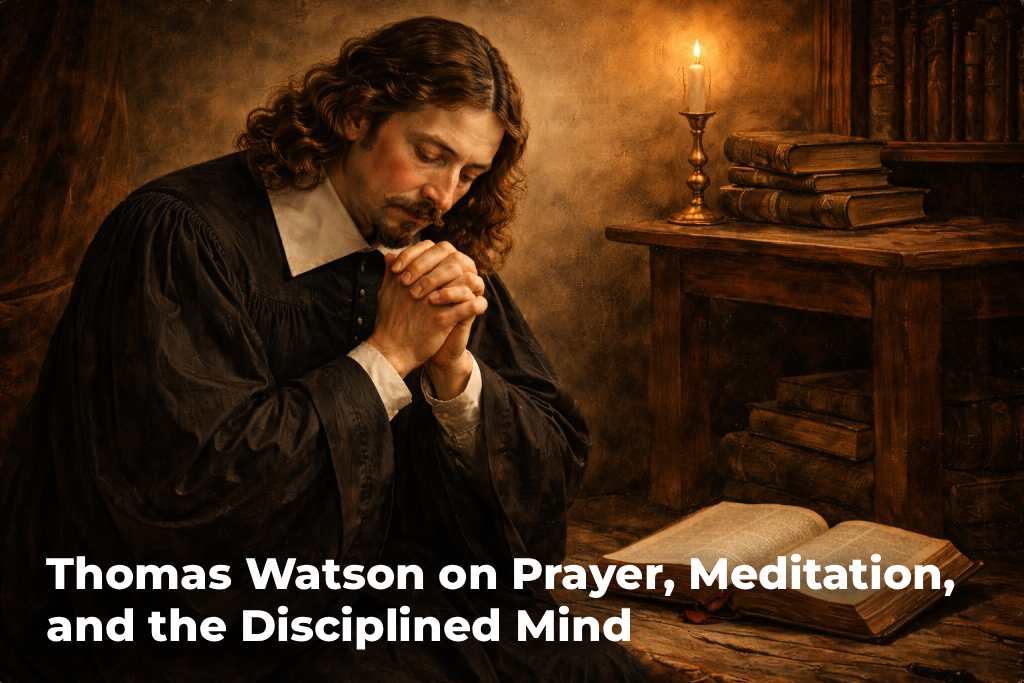
Thomas Watson on Prayer, Meditation, and the Disciplined Mind
I think one of the quiet yet big assumptions of modern Christianity is that spiritual growth should happen almost automatically. Read the right books. Attend the right church. Avoid the worst sins. If you do that, then everything else will somehow fall into place.
Thomas Watson would gently but firmly dismantle that assumption (as would the Bible).
Watson believed that the Christian life is sustained not only by doctrine believed and obedience practiced, but by a disciplined inner life during the lifeless process of sanctification. Prayer and meditation were not optional add-ons for especially serious believers. They were ordinary means through which God shapes the mind, steadies the heart, and preserves faith over time.
Without them, Watson believed, even sound doctrine begins to lose its force.
The Problem of an Undisciplined Mind
Watson lived long before smartphones, social media, and constant digital noise. And yet, he speaks with startling relevance to the modern mind. He understood distraction, wandering thoughts, shallow attention, and spiritual forgetfulness.
In A Body of Divinity, Watson repeatedly stresses that truth must be pressed into the soul, not merely heard by the ear. A believer can affirm correct doctrine and yet live inconsistently because truth has not been properly digested.
Truths lie barren in the mind until meditation makes them fruitful.”
– Thomas Watson, A Body of Divinity
Watson believed many Christians suffer not from a lack of information, but from a lack of reflection. They hear sermons, read Scripture, and agree with doctrine, but never slow down long enough for truth to shape their thinking.
An undisciplined mind drifts. It forgets. It reacts rather than reflects. Over time, faith becomes thin because truth has not been allowed to sink deep.
Prayer as Serious Work
Watson did not treat prayer as religious sentiment or emotional expression. Prayer was serious work. Holy labor. An act of reverent dependence.
In The Godly Man’s Picture, Watson describes prayer as one of the distinguishing marks of a godly person. Not occasional prayer. Not hurried prayer. But thoughtful, deliberate communion with God.
A godly man is a praying man.”
– Thomas Watson, The Godly Man’s Picture
Prayer, for Watson, was not meant to impress God or inform Him. It was meant to humble the soul, align the will, and cultivate reverence. Prayer trained the believer to think God’s thoughts after Him.
Watson would have little patience for prayer that is casual, rushed, or thoughtless. Not because God is fragile, but because the soul is. Shallow prayer produces shallow faith.
Why Meditation Has Been Lost
If prayer is neglected today, meditation is almost entirely forgotten.
By meditation, Watson did not mean emptying the mind or sitting in silence for its own sake. He meant focused, deliberate thinking on God’s truth. Turning Scripture over. Applying it personally. Asking what it reveals about God, sin, grace, and duty.
In A Body of Divinity, Watson defines meditation plainly:
Meditation is the chewing upon the truths we have heard.”
– Thomas Watson, A Body of Divinity
That image is deliberate. Truth must be chewed before it can nourish. Without meditation, Scripture remains abstract. With meditation, Scripture becomes personal and powerful.
Watson believed meditation was the missing link between hearing truth and living it. Prayer brings the soul to God. Meditation brings God’s truth into the soul.
The Disciplined Mind as a Battlefield
Watson understood the mind as a battleground. What captures the thoughts shapes the life.
In The Ten Commandments, Watson presses the inward reach of God’s law. Sin does not begin with actions. It begins with thoughts. Desires. Intentions.
The heart is the first thing that is led away in sin.”
– Thomas Watson, The Ten Commandments
This is why Watson insisted on mental discipline. An undisciplined mind leaves the door open to temptation. A disciplined mind resists sin earlier, before it gains strength.
Prayer and meditation work together here. Prayer humbles the heart before God. Meditation fills the mind with truth. Together, they guard the inner life.
Why Shallow Devotion Produces Shallow Obedience
Watson would not be surprised by the inconsistency many Christians feel. He would diagnose it quickly. Weak devotion produces weak obedience.
A believer who rarely prays seriously will struggle to obey steadily. A believer who never meditates on Scripture will forget why obedience matters.
Watson believed holiness is sustained in private before it ever appears in public. Public obedience without private devotion eventually collapses.
This explains why some believers appear strong for a time and then drift. Their inner life was never cultivated. There was no depth to draw from when pressure came.
Meditation Strengthens Assurance
Watson also ties meditation to assurance. In The Godly Man’s Picture, he shows that reflection on God’s promises strengthens confidence and steadies the soul.
Meditation reminds the believer of what God has done, what He has promised, and what He cannot deny. When fear, doubt, or suffering arises, a mind trained by meditation does not panic as easily.
Assurance is not sustained by constant emotional highs. It is sustained by truth remembered and applied.
Prayer, Meditation, and Reverence
One of the dangers Watson saw clearly was familiarity without reverence. Prayer and meditation preserve the fear of God.
Prayer reminds the believer who God is. Meditation reminds the believer what God has said. Together, they keep worship weighty and faith serious.
Watson believed casual devotion leads to casual Christianity. Disciplined devotion produces stability, humility, and endurance.
Why This Matters Now
We live in an age of distraction. Minds are constantly occupied, but rarely focused. Many believers consume enormous amounts of content, yet struggle to pray attentively or meditate meaningfully.
Watson would say the problem is not busyness. It is priority. Prayer and meditation require intention. They require slowing down. They require effort. But they repay that effort by strengthening faith, sharpening obedience, and preserving reverence.
A Final Word
Thomas Watson did not believe spiritual depth was reserved for a select few. He believed ordinary Christians could cultivate disciplined minds through ordinary means:
Prayer, meditation, and an attention to truth.
These are not glamorous practices. They do not attract applause. But they shape the soul quietly and powerfully over time.
Faith that endures is faith that has learned to pray seriously and think deeply.
And that kind of faith does not happen by accident.
Transition to the Next Article
If prayer and meditation train the mind for this life, they also lift the heart toward what lies beyond it.
That brings us next to Watson’s teaching on heaven, hell, and eternity, and why eternal realities gave his faith its seriousness and strength. I’ll bring this array of topics in Part 8, coming soon!
Thomas Watson Series
If this post helped you, you may also want to read the rest of this series on Thomas Watson. Each article looks at a different aspect of his life, teaching, and lasting value for Christians today.
- Who Was Thomas Watson and Why Should Modern Christians Read Him? – Part One
- The God Who Is: Thomas Watson on the Attributes of God – Part Two
- True Repentance in an Age of Excuses: Thomas Watson on the Repentance God Requires – Part Three
- Grace That Trains Us: Thomas Watson on Holiness and Sanctification – Part Four
- The Fear of God and the Death of Casual Christianity: Thomas Watson on Reverence, Awe, and Obedient Fear – Part Five
- Why Shallow Faith Collapses Under Pressure: Thomas Watson on Rooted Faith, Trials, and Endurance – Part Six
- Thomas Watson on Prayer, Meditation, and the Disciplined Mind – Part Seven
- Heaven, Hell, and Eternity Through the Eyes of Thomas Watson – Part Eight
- Why Thomas Watson Took Sin Seriously, and So Should We – Part Nine
- Reading the Puritans Without Becoming Weird or Proud – Part Ten
- A Beginner’s Guide to Reading Thomas Watson Today – Part Eleven
- What Reading Thomas Watson Did to My Faith – Part Twelve
3 Comments
Reading the Puritans Without Becoming Weird or… Pingback
[…] Thomas Watson on Prayer, Meditation, and the Disciplined Mind – Part Seven […]
A Beginner's Guide to Reading Thomas Watson… Pingback
[…] Thomas Watson on Prayer, Meditation, and the Disciplined Mind – Part Seven […]
What Reading Thomas Watson Did to My Faith - The… Pingback
[…] Thomas Watson on Prayer, Meditation, and the Disciplined Mind – Part Seven […]