

When someone comes to Christ for salvation, we celebrate. And we should. Heaven rejoices over one sinner who repents! The church should rejoice, too. But I have watched something happen over and over again in churches. We celebrate the decision. We count the hand raised. We welcome them forward. And then we quietly assume they will figure the rest out.
They won’t.
The first 90 days after conversion matter more than most Christians realize. In those early weeks, spiritual patterns are formed. Doctrinal foundations are laid. Habits are established. Questions surface. Doubts creep in. The world lures them away. Temptations intensify. And if no one walks closely with that new believer, confusion and spiritual drift set in faster than we expect.
I have seen men on fire for Christ in week one who were spiritually cold by month six or month twelve. Not because the Gospel failed them. Not because the Spirit abandoned them. But because no one helped them build a foundation.
New birth is immediate. Growth is not.
1. The First 90 Days Shape Long-Term Stability
Think about a newborn child. You would never assume that because a baby is alive, he is ready to function independently. He needs feeding. Protection. Care. Structure. A safe environment. The same is true spiritually.
A new believer has been made alive in Christ. According to 2 Corinthians 5:17, he or she is a new creation. Ephesians 2:1–5 tells us that he or she has passed from death to life. But the new believer is still learning how to walk.
If those first three months are filled with biblical truth, healthy community, prayer, accountability, and clarity about the Gospel, the trajectory is strong. If those first three months are filled with isolation, confusion, emotional hype, or shallow teaching, the trajectory weakens quickly.
I have personally discipled men who told me later, “If someone hadn’t helped me in those first few weeks, I probably would have drifted.”
That is not being overly dramatic. That is, in fact, reality.
2. Assurance Must Be Established Early
One of the most common struggles in the early days is assurance. A new believer sins and immediately wonders, “Was I ever really saved?”
No one told him that the presence of conviction is evidence of new life. No one showed him Romans 8:1, that there is no condemnation for those who are in Christ Jesus. No one walked him through 1 John 5:13, that we can know we have eternal life.
Instead, he lives on emotional swings. When he feels spiritual, he feels secure. When he stumbles, he questions everything.
The first 90 days should ground a believer deeply in justification by faith alone. He must understand that his salvation rests on Christ’s finished work, not on his performance. If that foundation is not laid early, insecurity and legalism creep in quietly.
3. A Realistic View of the Fight Against Sin
Another shock for new believers is that temptation does not disappear.
Some assume that once they are saved, sinful desires will instantly vanish. Then the old habits surface. The same lust. The same anger. The same pride. And they panic.
Romans 7 becomes incredibly important here. So does Galatians 5. The Christian life is a war between the flesh and the Spirit. The struggle does not prove you are lost. It proves you are alive.
If someone explains this clearly in the first 90 days, the believer is not shaken when the battle intensifies. He understands sanctification. He expects the fight. He learns to repent quickly and run back to Christ instead of hiding in shame.
If no one explains this, many quietly conclude that Christianity “didn’t work.”
4. Daily Rhythms Must Be Built Immediately
Zeal is not the same as discipline.
A new believer often says enthusiastically, “I want to read the whole Bible!” That desire is good. But without guidance, they do not know where to begin. They open the Scriptures randomly, they get confused in Leviticus, and they stall. And then embarrassment sets in.
The first 90 days should establish simple, repeatable rhythms. Daily time in the Word. Daily prayer. Consistent church attendance. Some form of accountability.
Nothing complicated. Nothing overwhelming. Just steady habits.
When these rhythms are built early, they tend to stick. When they are delayed, spiritual life becomes sporadic and fragile.
I have learned that it is far easier to build healthy habits in month one than to repair spiritual neglect in year three.
5. The Local Church Must Be Central
A new believer who stays disconnected is at risk.
Hebrews 10:24-25 commands believers not to neglect meeting together. Acts 2 shows us that the early church gathered, learned, prayed, and shared life together. Christianity has always been communal.
Yet I have watched new believers who attend once or twice and then slowly fade because no one brought them in intentionally.
The first 90 days should include intentional integration. Not just a handshake at the door. Real relationships. Real conversations. Real discipleship.
Isolation is one of Satan’s most effective tools against young Christians.
6. The Gospel Must Be Deepened, Not Assumed
Many people understand enough of the Gospel to be saved. They know they are sinners. They know Jesus died and rose again. They believe. But their understanding is thin.
They may not grasp imputed righteousness. They may not understand repentance fully. They may not know how justification and sanctification relate. They may still subtly believe that God loves them more on good days than on bad ones.
The first 90 days should take the believer deeper into the Gospel. Not beyond it. Deeper into it.
The cross must remain central. Grace must be explained repeatedly. The believer must learn to preach the Gospel to himself.
If this happens early, stability grows. If it does not, performance-based Christianity creeps in quietly.
Why Churches Must Take This Seriously
If we neglect the first 90 days, we should not be surprised when people disappear in year two.
We cannot be content with conversions without discipleship. Jesus did not say, “Go and make decisions.” He said, “Go and make disciples” in Matthew 28:19-20.
Disciples are taught. Disciples are trained. Disciples are formed.
I believe many churches would see greater long-term fruit if they intentionally structured those first three months after conversion. Assign someone. Provide a guide. Walk closely. Answer questions. Lay foundations carefully.
Because what is built early tends to last.
Why I Wrote New in Christ
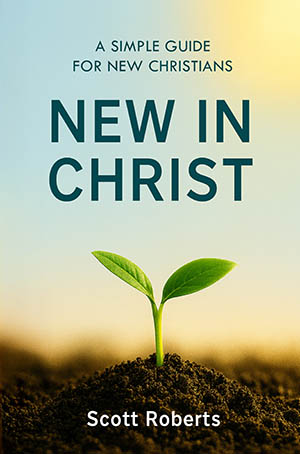
This burden is exactly why I wrote the book New in Christ.
I have seen new believers genuinely saved and yet spiritually fragile. I have watched men and women struggle simply because no one slowed down and walked them through the basics clearly and biblically.
New in Christ was written to serve those first 90 days.
This short, easy-to-read book walks through assurance of salvation. It explains the Gospel carefully. It addresses sin and spiritual growth honestly. It gives structure for Bible reading and prayer. It helps anchor believers in church life and obedience.
It is not meant to replace discipleship. It is meant to support it. This guide for new Christians gives new believers clarity when their emotions fluctuate. It gives them truth when doubts surface. It gives them direction when they ask, “Well, what do I do now?”
If you are a pastor, church leader, or mature believer, I encourage you to think seriously about who is responsible for the first 90 days in your church.
If you are a new believer yourself, do not try to figure it out alone. God never intended you to.
The Christian life is not a sprint fueled by emotion. It is a lifelong walk rooted in truth, shaped by discipline, strengthened by community, and sustained by grace.
And the first 90 days matter more than you think.
0 Comments