
The Theology of Thomas Watson Series: Part 8
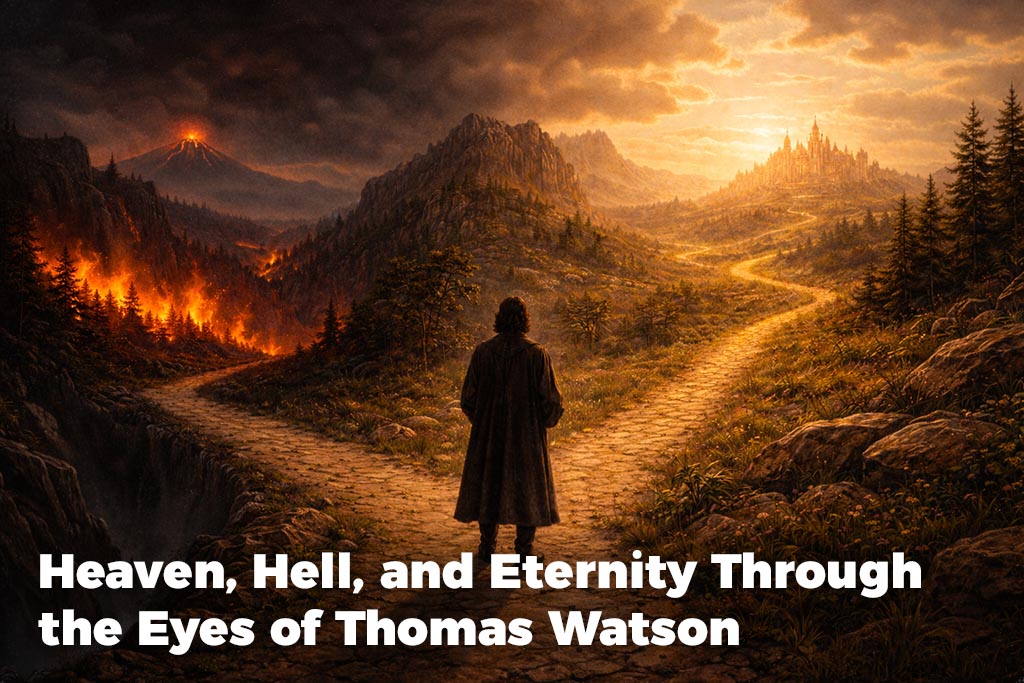
Heaven, Hell, and Eternity Through the Eyes of Thomas Watson
One of the great weaknesses of modern Christianity is not a lack of information, resources, or passion. It is a lack of eternity. We think in days, weeks, and years. We plan for careers, retirements, and experiences. But we rarely live with the steady awareness that this life is brief, judgment is certain, and eternity is forever.
Thomas Watson lived and wrote as a man who never forgot that.
For Watson, heaven and hell were not abstract doctrines reserved for theologians or end-times charts. They were shaping realities. Eternity gave weight to every choice, urgency to repentance, seriousness to holiness, and comfort to suffering believers. Without eternity in view, Watson believed Christianity quickly shrinks into something thin and fragile.
The Scripture is our pole-star to direct us to heaven, it shows us every step we are to take; when we go wrong, it instructs us; when we go right, it comforts us.”
– Thomas Watson, A Body of Divinity
Eternity as the Framework of the Christian Life
Watson did not treat eternity as a future appendix to faith. He treated it as the framework for present obedience.
In A Body of Divinity, Watson repeatedly reminds readers that this world is temporary, passing, and unreliable. Time moves in one direction only, and every person is moving toward an unalterable destination.
Watson understood something modern Christians often avoid: how you think about eternity determines how you live now. When eternity fades from view, sin feels less dangerous, obedience feels less urgent, and faith becomes preoccupied with comfort rather than faithfulness.
Watson would say that many spiritual problems are not caused by weak willpower, but by short vision. A man who never lifts his eyes beyond the present moment will keep choosing what feels good now over what is right forever.
Heaven as the Believer’s True Home
When Watson speaks of heaven, he does not do so sentimentally. Heaven is not a vague place of clouds and rest. It is the believer’s final home, the place where every promise of God reaches completion.
Watson describes heaven as the full enjoyment of God Himself. Not merely relief from suffering, but communion with God unhindered by sin. Faith gives way to sight. Hope gives way to possession. Prayer gives way to praise.
Watson believed heaven reshapes how believers endure hardship now. A Christian who lives for heaven can suffer without despair. Loss does not crush him because what he has lost was never ultimate. Death does not terrify him because it becomes a doorway, not an end.
This is why Watson constantly urges believers to keep heaven in view. Heaven was meant to loosen the grip of the world and strengthen perseverance.
He purifies them, and prepares them for heaven. These hard frosts hasten the spring flowers of glory.”
– Thomas Watson, A Body of Divinity
The Joy of Heaven Is God Himself
Watson was careful not to reduce heaven to benefits without God. The greatest joy of heaven, he insisted, is not escape from pain, reunion with loved ones, or freedom from struggle. It is God.
He repeatedly emphasized that heaven is the place where the believer enjoys God fully, without distraction, weakness, or wandering affection. Sin no longer interrupts fellowship. The heart is no longer divided.
This focus keeps heaven from becoming self-centered. Heaven is not about personal fulfillment detached from worship. It is fulfillment through worship.
Watson believed that a shallow view of heaven produces shallow longing. But a God-centered view of heaven produces holiness now. A person who longs to be with God learns to walk carefully before Him.
Hell as a Necessary and Sobering Reality
If Watson’s teaching on heaven comforts the believer, his teaching on hell sobers the soul.
Watson never treated hell as an embarrassment or metaphor. He believed Scripture spoke clearly, and he refused to soften what God had revealed. Hell, for Watson, was the just consequence of sin against an infinite God. He emphasized that God does not delight in judgment, but He does uphold righteousness.
Watson believed that minimizing hell inevitably minimizes sin. And when sin is minimized, grace is cheapened.
Hell is a place of pure justice. The torments of the damned have no mixture. ‘They shall drink of the wine of the wrath of God, which is poured out without mixture.'”
– Thomas Watson, The Eternity of God
Why Watson Refused to Soften Eternal Judgment
Watson understood that many would accuse him of severity. But he believed that silence or softness about hell was not kindness. It was deception.
If hell is real, warning is love.
Watson believed preaching hell should not produce despair in believers, but humility and gratitude. The Christian has not escaped judgment because he was better, but because Christ bore judgment in his place.
At the same time, Watson believed the reality of hell should awaken the careless, confront the presumptuous, and strip away false assurance. Eternity does not allow for half-hearted faith.
Eternity Makes Sense of Suffering
One of Watson’s most pastoral contributions is how he ties eternity to suffering. Eternity reframes hardship. It does not erase pain, but it refuses to let pain be ultimate.
Watson reminds believers that affliction is temporary, but glory is eternal. Pain is measured in years. Joy is measured in forever. This perspective does not minimize suffering. It contextualizes it.
Watson believed suffering often feels unbearable because we forget how brief it is in comparison to eternity. When eternity returns to view, suffering does not disappear, but it becomes endurable.
This is why Watson could speak with such steadiness to persecuted and weary believers. He reminded them that God wastes nothing, and eternity will reveal what time obscured.
Eternity and the Urgency of Repentance
Watson consistently connects eternity to repentance. If eternity is real, delay is dangerous.
He warned against the illusion of endless time. Tomorrow is not promised. Conviction ignored hardens the heart. Opportunities resisted may not return.
Watson believed many souls perish not because they rejected Christ loudly, but because they postponed obedience quietly. Eternity turns procrastination into folly.
Tomorrow may be our dying day; let this be our repenting day.”
– Thomas Watson, The Doctrine of Repentance
Eternity and the Seriousness of Holiness
Watson also ties eternity to holiness. How a person lives now reflects where they expect to live forever.
Holiness does not earn heaven, but it reveals where the heart is oriented. A person who loves sin and resists obedience shows little evidence of longing for heaven.
Watson would say that heaven-mindedness produces earthward faithfulness. It does not create escapism. It creates seriousness. When eternity is real, obedience matters. Choices matter. Faithfulness matters.
Why Modern Christianity Avoids Eternity
Watson would recognize modern discomfort with heaven and hell immediately. Eternity interrupts consumer Christianity. It disrupts comfort-focused faith. It exposes shallow assurance.
It is easier to speak of purpose than judgment. Easier to speak of blessing than accountability. Easier to speak of hope than holiness.
But Watson would warn that removing eternity empties Christianity of its power. Faith becomes sentimental. Grace becomes casual. Obedience becomes optional.
Eternity restores weight.
A Final Word
Thomas Watson lived as a man who expected to stand before God. That expectation shaped everything.
Heaven comforted him. Hell sobered him. Eternity steadied him.
Modern Christians do not need more novelty. We need longer vision. We need to remember that life is brief, judgment is real, Christ is sufficient, and eternity is forever.
Watson understood that. And his voice still calls us to lift our eyes beyond the present moment and live in light of what will never end.
Transition to the Next Article
If eternity exposes the seriousness of sin, it also explains why Watson took sin so seriously himself.
That is where we go next.
Thomas Watson Series
If this post helped you, you may also want to read the rest of this series on Thomas Watson. Each article looks at a different aspect of his life, teaching, and lasting value for Christians today.
- Who Was Thomas Watson and Why Should Modern Christians Read Him? – Part One
- The God Who Is: Thomas Watson on the Attributes of God – Part Two
- True Repentance in an Age of Excuses: Thomas Watson on the Repentance God Requires – Part Three
- Grace That Trains Us: Thomas Watson on Holiness and Sanctification – Part Four
- The Fear of God and the Death of Casual Christianity: Thomas Watson on Reverence, Awe, and Obedient Fear – Part Five
- Why Shallow Faith Collapses Under Pressure: Thomas Watson on Rooted Faith, Trials, and Endurance – Part Six
- Thomas Watson on Prayer, Meditation, and the Disciplined Mind – Part Seven
- Heaven, Hell, and Eternity Through the Eyes of Thomas Watson – Part Eight
- Why Thomas Watson Took Sin Seriously, and So Should We – Part Nine
- Reading the Puritans Without Becoming Weird or Proud – Part Ten
- A Beginner’s Guide to Reading Thomas Watson Today – Part Eleven
- What Reading Thomas Watson Did to My Faith – Part Twelve
0 Comments