The Lost Calling of Fatherhood: Raising and Discipling Your Children in the Faith
There are few callings more weighty than fatherhood.
A man can build a business, lead a ministry, write books, preach sermons, and still quietly fail in the living room. I say that soberly, not dramatically. Scripture places the spiritual formation of children squarely on the shoulders of fathers. Deuteronomy 6:6-7 says, “And these words that I command you today shall be on your heart. You shall teach them diligently to your children”. That command was not given to priests alone. It was given to fathers in their homes.
Somewhere along the way, that practice faded.
We outsource discipleship to youth pastors, Christian schools, podcasts, conferences, Christian programming, social media, and Sunday sermons. Those things have value. I am thankful for them. But they were never meant to replace a father opening the Bible at the kitchen table.
When I look back over the years with my two boys, now grown men in their mid-twenties, I feel gratitude. Admittedly, I also feel a quiet ache. I wish I had done more. I wish I had been more intentional. There were seasons when I was busy, distracted, stressed, or simply tired. At the time, I was a full-time single dad, and I focused a lot on dating women. A lot of emphasis was put on being a voice-over artist, creating and producing podcasts, and doing straightforward work (I always used the excuse, “Well, I’ve got to be a provider, don’t I?”) I assumed just because they went to youth group or attended a Sunday morning sermon, my sons were automatically absorbing what they needed.
That assumption was naive.
Discipleship requires deliberate effort. It requires time that feels inconvenient. It requires a father who is willing to look his children in the eyes and talk about sin, grace, repentance, and hope.
The Apostle Paul writes in Ephesians 6:4, “Fathers, do not provoke your children to anger, but bring them up in the discipline and instruction of the Lord”. Notice the clarity. Fathers are named directly. Not parents in general. Not churches. Fathers.
Why is this practice lost?
First, many men feel spiritually inadequate. They think, “I am not a theologian. I do not know enough.” Or they rationalize, “My own walk is inconsistent. How could I ever teach something about this Christian stuff?” So they remain silent. The sad thing is, silence becomes a habit. And a habit becomes years.
Second, modern culture has quietly convinced men that providing financially is the primary measure of fatherhood. Provision matters. Scripture affirms that. But a fully stocked fridge without a shepherded soul is not biblical fatherhood.
Third, we are distracted. Phones, streaming platforms, constant news cycles, and endless notifications. We are physically present yet mentally elsewhere. Children feel that.
I remember nights when I would sit with one of my boys while he was younger, and instead of pressing into conversation, I would check email or scroll something on social media that now I cannot even remember. That time is gone forever. While I did talk to my boys about the Gospel when they were younger, the times I did it were few and far between. Instead, many of their memories of me are of me sitting in my recliner, swiping up and down on my phone. Or me with headphones and my laptop, editing a podcast or voice-over file.
I would gladly trade a thousand meaningless scrolls for one more long conversation about what it means to be a follower of Jesus Christ. Or to keep work tasks during work hours, and give them uninterrupted face time and show them what it means to model the Christian life.
So what does faithful fatherly discipleship actually look like?
It is simpler than we imagine.
1. Open the Bible regularly in your home.
Not occasionally. Not once every few months. Regularly. As in, daily.
It does not have to be a full sermon. Read a short passage. Explain it plainly. Ask questions. Psalm 78:4 says, “We will not hide them from their children, but tell to the coming generation the glorious deeds of the Lord”. Tell them what God has done. Tell them what Christ has accomplished.
When my boys were younger, the times that stick in my mind are not elaborate family worship sessions. They were simple. A short reading. A prayer together. A question like, “Do you know what this passage means?” Those moments mattered more than I realized.
2. Confess your own sins.
Children do not need perfect fathers. They need repentant ones.
If you speak harshly, apologize. If you lose your temper, own it. When a father humbles himself before his children, he demonstrates the Gospel in action. He shows that forgiveness is real. That Christ actually cleanses sinners. 1 John 1:9 promises, “If we confess our sins, he is faithful and just to forgive us our sins and to cleanse us from all unrighteousness”. Let your children see you believe that.
I can remember moments when I disciplined one of my boys way too harshly. He matched my furiosity and stormed off! Later, after both of us had cooled down, I sat on the edge of his bed and said, “Son, Dad handled that wrong. Will you forgive me?” Those conversations were holy ground. They taught more real-life theology than many formal lessons.
3. Speak about God naturally, not awkwardly.
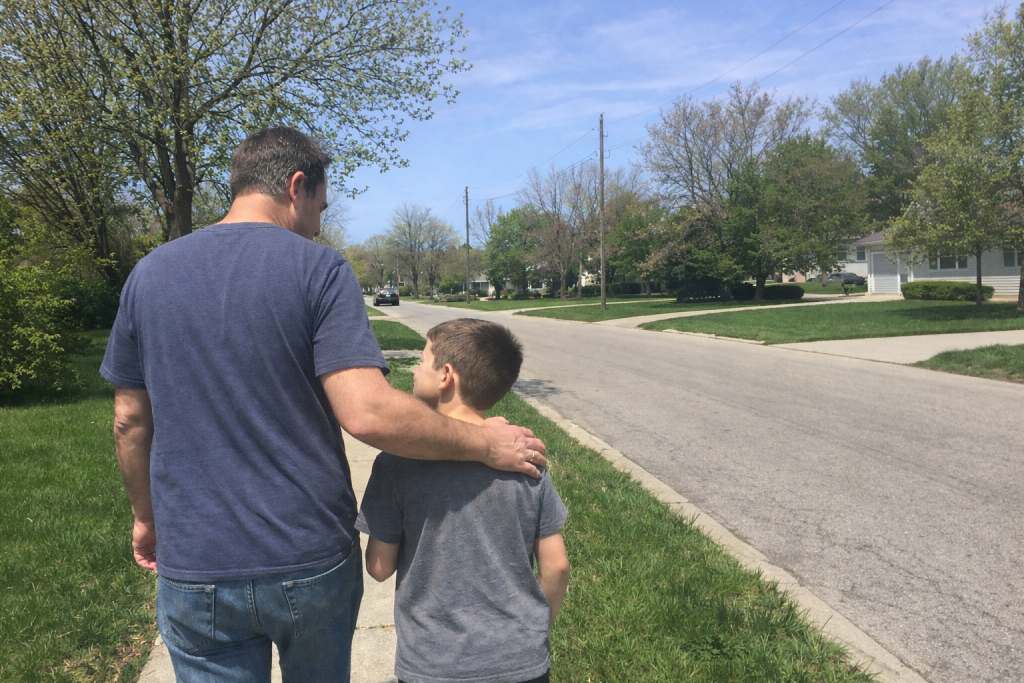
Discipleship is not confined to a fifteen-minute devotional slot. It happens in the car. On a walk. After a movie. During a news event. When something beautiful happens. When something tragic happens.
When my boys were teenagers, we would sometimes talk late at night about doubts, about cultural issues, about friends at school. Those were not scripted moments. They were organic. But they required availability. If a father is always rushing to the next thing, he will miss those openings.
4. Pray with and for your children.
Let them hear you pray for their hearts, not just their grades or sports performance. Pray that they would love Christ. Pray that God would guard them from temptation. Pray for their future spouse. Pray for their character.
I did pray for my boys. I still do. But I wish I had prayed with them more consistently as they grew older. As children become teenagers, fathers sometimes retreat. We assume they no longer want that closeness. Many still do, even if they roll their eyes once or twice.
5. Model what you teach.
If you preach gentleness but explode in anger, your words lose weight. If you speak about church commitment but rarely prioritize it, your example contradicts your instruction.
“Be imitators of me, as I am of Christ”, Paul writes in 1 Corinthians 11:1. That is fatherhood in a sentence. Live in such a way that your children can follow you as you follow Jesus.
This is where I feel the deepest conviction when I look back. There were seasons when stress shaped my tone more than grace did. There were days when impatience overshadowed joy. I focused on the wrong things and did not trust God the way I should have. My sons saw that.
But keep in mind, God is merciful. He redeems flawed fathers. But I wish I had slowed down more. I wish I had guarded my spirit more carefully for their sake.
6. Teach them a biblical worldview.
Our culture catechizes relentlessly. Social media disciples. Schools disciple. Entertainment disciples. If fathers are passive, someone else will eagerly step in.
Talk about sexuality from Scripture. Talk about work. Talk about suffering. Talk about justice. Show them that the Bible speaks clearly to every area of life. 2 Timothy 3:16-17 reminds us that “All Scripture is breathed out by God and profitable for teaching, for reproof, for correction, and for training in righteousness”. All Scripture. Not fragments.
When my boys began encountering competing ideologies, I realized how crucial those earlier conversations had been. They were not abstract theological exercises. They were preparation.
7. Remember that salvation belongs to the Lord.
This may be the hardest lesson.
You can do everything faithfully and still watch your child wrestle deeply. You cannot regenerate their heart. Only God can. John 3:8 says, “The wind blows where it wishes… So it is with everyone who is born of the Spirit”. The Spirit moves sovereignly.
That truth brings both humility and hope. We labor. We teach. We pray. But we entrust our sons and daughters to the mercy of God.
Now that my boys are grown men, our conversations look different. They are not children under my roof. I cannot rewind time. But I can remain present as much as I can, even though we live far away. I can still speak the truth. I can still pray fervently. I can still model repentance and faith.
If you are a young father reading this, hear me clearly: do not assume you have endless years. Childhood moves quickly. The Lego years become the high school years almost overnight. The voice that once asked you to read one more story will soon be making real adult decisions, and, depending on how you raise them, may or may not be based on biblical principles.
Sit down with them tonight. Open the Bible. Pray. Ask questions. Listen carefully. And put the phone away.
And if you are a father who feels you have already missed too much, do not sink into regret. The Gospel you teach your children applies to you as well. Christ forgives wasted years. He restores what seems lost. Start now. Even if your children are teenagers. Even if they are grown.
Fatherhood is not measured by perfection. It is measured by faithfulness.
Lead them. Love them. Teach them. Pray for them.
And trust the God who loves your children even more than you do.