Christian apologists often use a simple phrase when discussing the resurrection of Jesus:
Many people die for a lie they think is the truth, but isn’t the truth. But no one dies for a lie they know is a lie.”
It is usually brought up in conversations about the apostles. The argument goes something like this: the apostles claimed they saw the risen Christ. They endured persecution for that claim. Many of them were eventually killed. If they had invented the resurrection, they would have known it was false.
Millions of people may sincerely die for error. Muslims have died believing they were defending the honor of Allah. Hindus have sacrificed themselves in acts of religious devotion. Members of apocalyptic cults such as Heaven’s Gate have taken their own lives, believing they were stepping into a higher existence. Branch Davidians remained loyal to David Koresh even as the walls closed in during the Waco massacre in 1993. Political revolutionaries and nationalist movements throughout history have marched willingly into death for causes that were deeply flawed. Human beings are capable of intense sincerity, even when they are tragically wrong. But there is a crucial distinction. People may die for something they believe is true. They do not willingly endure suffering and death for something they know they themselves fabricated.
That argument carries weight. But thoughtful critics push back.
They might assert, “What about Joseph Smith? He died for Mormonism. If he made it up, then he died for a lie he knew was a lie. So doesn’t that collapse your argument?”
That is a fair objection. If the comparison holds, then the martyrdom argument loses force. So let’s look at it carefully.
What the Martyrdom Argument Actually Claims
To begin, we need to define the argument correctly.
Christians are not claiming that dying for a belief proves the belief is true. That would be absurd. People die for false religions, political movements, cult leaders, and conspiracy theories. Sincerity is not the same thing as truth.
The argument is much narrower.
It applies uniquely to the apostles because of their role as eyewitnesses. They claimed to have seen Jesus alive after His crucifixion. Not as a spiritual vision in their hearts. Not as a metaphor. They described physical encounters. In Luke’s Gospel, Jesus invites them to touch Him. In John’s account, Thomas is told to place his hand in Christ’s wounds. Acts records that Jesus presented Himself alive by many proofs over a period of forty days. In 1 Corinthians 15, the apostle Paul says that over 500 witnesses saw the risen jesus.
If those appearances were fabricated, the apostles would have known it. They were not inheriting a legend centuries later. They were either telling the truth about what they experienced, or they were deliberately lying about it.
That is the critical distinction.
The resurrection was a public, historical claim, preached in Jerusalem within weeks of the crucifixion. If Jesus’ body were still in the tomb, Christianity could have been shut down immediately. The apostles were staking everything on a claim that could be checked in the very city where it allegedly occurred.
So the martyrdom argument is not that “dying proves truth.” It is that firsthand witnesses do not willingly suffer and die for something they know they invented.
Is Joseph Smith a Parallel Case?
Now we turn to Joseph Smith.
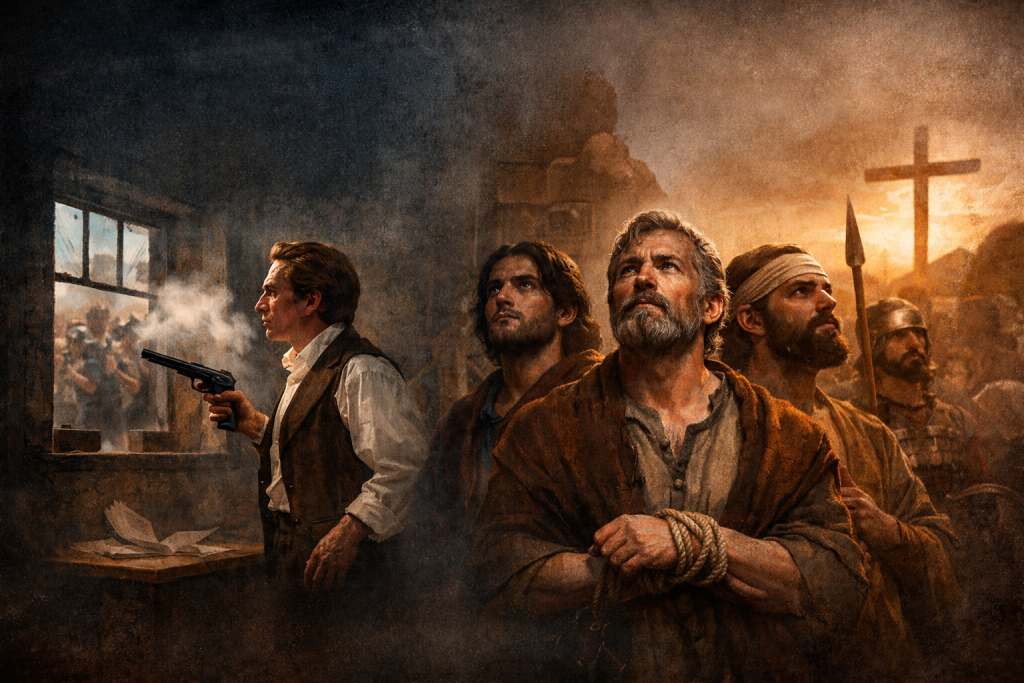
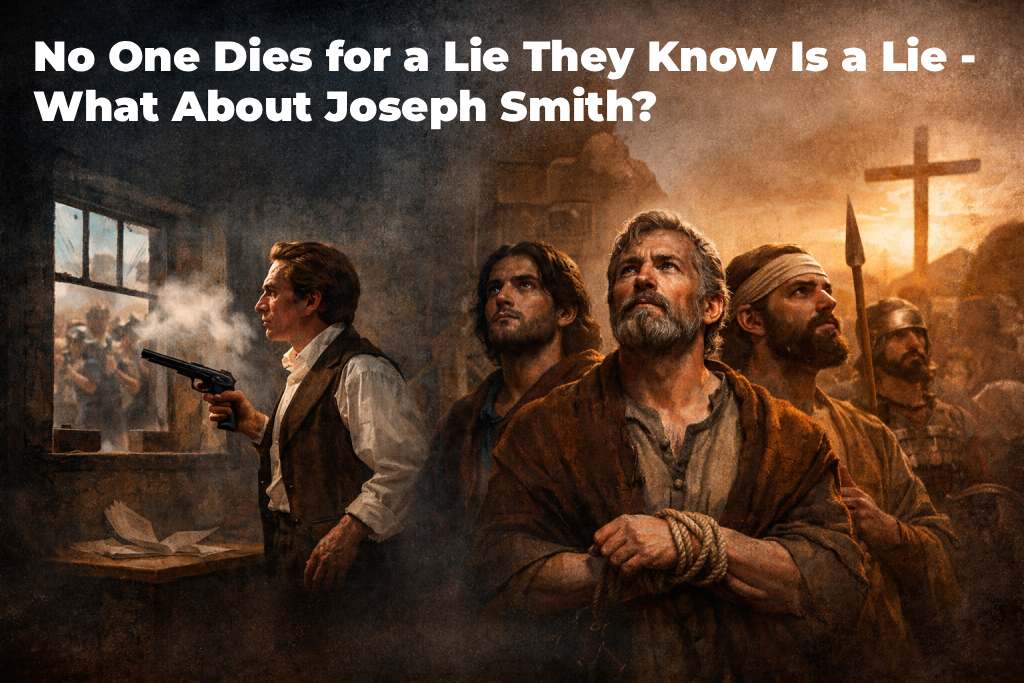
He was killed by a mob in 1844 while imprisoned in Carthage, Illinois. Latter-day Saints regard him as a martyr. Some critics argue that if Smith knowingly fabricated Mormonism and still died for it, then the “no one dies for a lie they know is a lie” claim is false.
But the comparison breaks down at several points.
First, the nature of the claims is fundamentally different. The apostles testified to a public event that had just happened. They claimed repeated, physical encounters with a resurrected man whom thousands in Jerusalem had recently seen crucified. The tomb could be examined. The authorities, such as the Romans and the Jewish religious leaders, were extremely hostile, and had the means, motives, and opportunity to suppress the movement if they were able to. Christianity rose in the very place where the resurrection could be easily disproven.
Joseph Smith’s foundational claims were of a different category. He reported private angelic visitations and the discovery of golden plates that were later taken away (and which have never been found). Whatever one thinks of those claims, they were not public historical events in the same way the resurrection was. They were revelations granted to him and a limited circle of witnesses. The epistemological position is not the same.
Second, the martyrdom argument hinges on knowledge. If the apostles stole the body, staged appearances, or fabricated the story, they would have known it was false. Their suffering would then have been for something they consciously invented.
With Joseph Smith, we simply do not know that he believed his movement was false. Even if Mormonism is untrue, that does not prove that Smith knew it was untrue. Human beings are capable of extraordinary self-deception. Charismatic leaders often convince themselves of their own narratives. A man can sincerely believe he is a prophet while being profoundly mistaken.
So the objection assumes something that cannot be demonstrated, namely that Smith knowingly propagated a fraud. That claim goes beyond the evidence.
But let’s say, for the sake of argument, that it was likely that Smith knew his Mormon religion was completely made up. Let’s grant the strongest possible version of the objection. Even then, the comparison still fails.
It is entirely plausible that a charismatic religious leader who has built an entire movement around himself would go to the grave without publicly admitting deception. Pride alone can carry a man a long way. The fear of disgrace, the loss of authority and power, the collapse of everything he constructed, and the humiliation before followers and family could easily harden a man into silence. A single founder protecting his legacy is not psychologically difficult to imagine.
But that is not the situation of the apostles.
If the resurrection were fabricated, it would have required a coordinated conspiracy among dozens of men (and women) from the beginning. These men were not gaining wealth, status, or power. They were scattered, hunted, beaten, and marginalized. A conspiracy that produces only suffering, no earthly reward, and no documented recantations stretches credibility.
It is one thing for a lone religious founder (like Joseph Smith) to cling to a lie he built. It is another for a group of ordinary fishermen, tax collectors, and laborers to maintain a shared fabrication under decades of persecution with nothing to gain and everything to lose.
Third, the context of Smith’s death was not a simple case of being executed for preaching a single historical claim. His imprisonment involved political tensions, accusations surrounding polygamy, and the destruction of a printing press. He was armed at the time of the attack and reportedly exchanged gunfire with the mob. That does not settle the truth question, but it shows that the situation was complex and entangled with civil unrest.
The apostles, by contrast, were persecuted for proclaiming one central message: that Jesus of Nazareth had been crucified and raised from the dead. They gained no political power, no wealth, no social advantage. Their testimony brought beatings, imprisonment, exile, and death.
That matters.
The Difference Between Sincerity and Fabrication
The real force of the martyrdom argument lies in the distinction between being mistaken and being deceptive.
A Muslim extremist may sincerely believe his doctrine is true. A cult member may genuinely believe her leader speaks for God. A man may be utterly convinced that his private revelation is divine.
But the apostles’ situation is different. If the resurrection was a lie, it would have been a lie of their own making. They would have known whether the body remained in the tomb. They would have known whether the appearances were staged. They would have known whether they had invented the story.
Their willingness to suffer does not prove Christianity true all by itself. But it makes the deliberate conspiracy theory psychologically implausible. It is difficult to explain why a group of men would persist, under torture and threat of death, in maintaining a lie that brought them no earthly reward.
And this is only one piece of the broader resurrection case. There is also the empty tomb, the early creedal tradition in 1 Corinthians 15 that dates to within a few years of the crucifixion, the transformation of James from skeptic to leader of the Jerusalem church, and the conversion of Paul from persecutor to apostle. Christianity did not slowly evolve into resurrection faith. It began with it.
The martyrdom of the apostles strengthens the conclusion that they were sincere eyewitnesses. It does not stand alone, but it fits coherently within the larger historical picture.
A Biblical Boundary
There is also a theological dimension that Christians should not ignore. In Galatians, Paul warns that even if an angel from heaven proclaims a different gospel, that message is to be rejected. That is a striking statement. It anticipates the possibility of later revelations that modify or contradict the apostolic message.
The Christian faith is anchored in the once-for-all event of Christ’s death and resurrection. It does not depend on new secret knowledge. It rests on what God has already done in history.
That is a fundamentally different foundation from movements built upon later private revelations.
Conclusion
The objection about Joseph Smith does not overturn the martyrdom argument for the apostles. It conflates two very different scenarios. Even if Joseph Smith were false, he could have been sincerely mistaken. The apostles, if the resurrection were fabricated, would have been deliberate deceivers.
That distinction is not minor.
The resurrection stands at the center of Christianity. If Christ is not raised, the faith collapses. If He is raised, then He is Lord. The apostles staked their lives on that claim in the city where it could have been disproven.
That does not look like men protecting a lie they knew was false. It looks like men who were convinced they had seen the risen Christ.
And if they were right, everything changes.
If Jesus truly rose from the dead, then He is not merely a moral teacher or a misunderstood prophet. He is the risen Son of God. Death did not defeat Him. The grave did not hold Him. God publicly vindicated Him before the world. The resurrection is the Father’s declaration that Jesus is exactly who He claimed to be.
That means His words carry absolute authority. His promises are certain. His warnings are real.
Scripture tells us that all have sinned and fall short of the glory of God. We know this instinctively. Our consciences testify against us. We have broken God’s law in thought, word, and deed. The resurrection does not ignore that reality. It answers it. Jesus did not only rise. He was crucified first. He bore the wrath our sin deserved. He stood in the place of sinners. Then He rose in victory, proving that the payment was accepted.
The question is no longer whether the apostles were sincere. The question becomes whether you will believe their testimony.
To trust in Christ is not to join a tribe or adopt a cultural identity. It is to turn from your sin and entrust yourself to the living Savior. It is to confess that Jesus is Lord and believe in your heart that God raised Him from the dead. It is to stop defending yourself before God and instead rest entirely in the finished work of Christ.
The risen Christ still saves. He still forgives. He still gives eternal life to all who come to Him in faith.
If He is risen, then He is Lord.
And if He is Lord, the only sane response is repentance and faith.
Turn to Him. Believe in the Lord Jesus Christ. He is not a myth, not a legend, not a private revelation buried in history. He is the crucified and risen King who calls you today.
You can read more about how you can receive eternal life through Jesus Christ.
Here are the Top 9 Reasons Why I Believe in Jesus Christ.