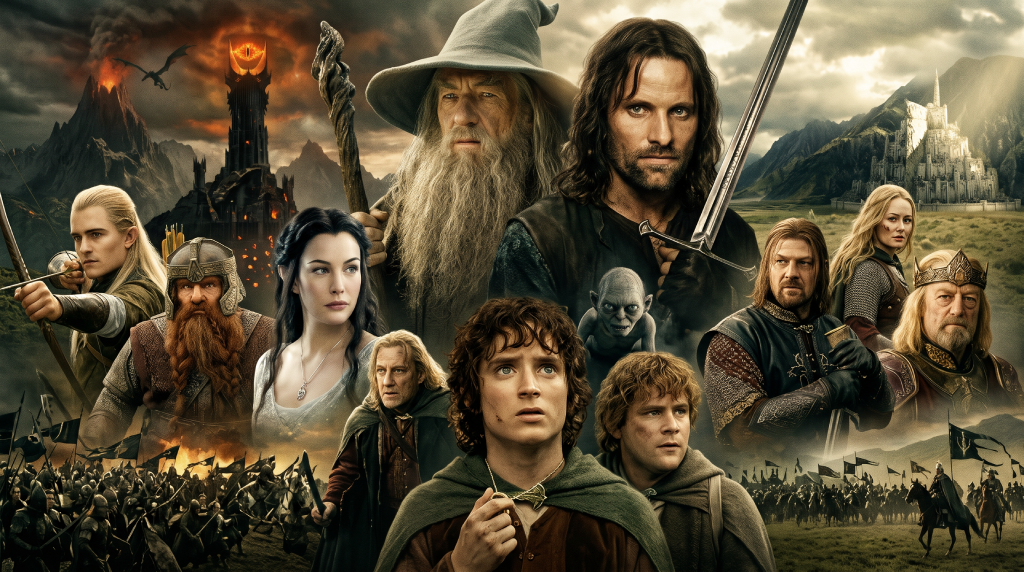
Power. Sacrifice. Mortality. Hope. Tolkien’s Middle-earth resonates because it reflects the deep biblical truths written into the human soul.
There are very few stories in human history that feel truly legendary. Most books come and go. Most movies shine for a season and fade into trivia.
Yet there are a handful of works that seem to transcend generations. They speak to something deep in the human soul. J.R.R. Tolkien’s The Lord of the Rings is one of those rare creations. It is not simply a fantasy tale about elves, hobbits, and distant lands. It has become a cultural milestone. A moral epic. A story that continues to shape imagination, language, art, and even theology long after its first publication.
When Tolkien’s trilogy was released between 1954 and 1955, few could have predicted the enormous impact it would have. Over the decades, The Lord of the Rings has sold well over 150 million copies worldwide. It has been translated into dozens of languages. It consistently ranks among the greatest works of fiction ever written. Polls in both the United Kingdom and the United States have repeatedly named it the most beloved novel of the twentieth century. College courses examine it. Pastors quote it. Artists draw inspiration from it. Generations of readers have found themselves drawn into Middle-earth and never quite left.
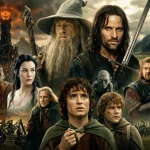
The film adaptations only multiplied that influence. Directed by Peter Jackson and released between 2001 and 2003, the trilogy of Fellowship of the Ring, The Two Towers, and Return of the King became one of the most successful cinematic achievements in history. Together, the films grossed nearly 3 billion dollars at the global box office. The final installment, The Return of the King, swept the Academy Awards with 11 Oscars, tying the all-time record. Across the trilogy, the three movies won 17 Academy Awards from 30 nominations. Critics praised the storytelling. Fans lined up for midnight premieres. Entire communities formed around the shared experience of these movies. The impact was not merely financial or artistic. It was cultural. It was moral. It was almost spiritual.
Even now, decades after Tolkien first put pen to paper and more than twenty years after the films debuted, the story remains vibrant and alive. Young readers still discover the books. New viewers still feel the emotional weight of Frodo’s burden or the stirring courage of Aragorn’s leadership. The film trilogy still stands as the last great (and perhaps the last?) pinnacle of movie-making.
The themes resonate because they deal with timeless realities. Good and evil. Power and corruption. Friendship and sacrifice. Death and the longing for something beyond it. These are not fantasy concerns; they are both human and spiritual concerns.
The Life of J.R.R. Tolkien
To understand why The Lord of the Rings carries such depth, it helps to understand the man who wrote it. John Ronald Reuel Tolkien was born in 1892 in what is now South Africa. His early life was marked by loss. His father died when he was very young. Later, his mother also passed away, leaving Tolkien and his brother effectively orphaned. Yet his mother had instilled in him something that would shape his entire life. She had brought him up in the Roman Catholic faith. Tolkien would later describe her as a martyr for the faith. Her devotion left a lasting imprint on his worldview.
Tolkien grew into a scholar of languages and literature. He served honorably in World War I and experienced firsthand the horrors of mechanized warfare; friends died around him, and entire landscapes were reduced to mud and destruction. Many scholars believe these experiences influenced his portrayal of Mordor and the bleak devastation brought by evil power. Yet Tolkien was not a cynic. He believed deeply in providence. He believed in moral order. He believed in the dignity of ordinary people. These convictions flowed naturally into his writing.
As a professor at Oxford, Tolkien became part of a group known as The Inklings, alongside literary figures like C.S. Lewis. They read one another’s work, debated theology, and encouraged the use of imagination to convey truth.
Tolkien famously insisted that The Lord of the Rings was not an allegory. He did not intend a one-to-one symbolic code. Yet he also made it clear that the story was profoundly shaped by his Christian worldview. In a letter, he wrote that the work was “fundamentally religious and Catholic.” The faith was woven into the fabric of the story, not pasted on top of it.
What the Lord of the Rings Story Was About
When we step into the main narrative of The Lord of the Rings, we quickly see that this is not merely a tale of adventure, but a grand, moral epic. At its heart stands the conflict between good and evil. This is an important fact to be aware of in our present cultural moment. Many modern stories blur moral lines until right and wrong seem meaningless and gray, where heroes become antiheroes, villains become misunderstood victims, and darkness becomes fashionable.
Tolkien moves in a different direction. He portrays evil as real. Corruption is real. Darkness is not romantic; it is destructive.
The Power of The One Ring
In the story, the One Ring to rule them all becomes the central symbol of this moral struggle. It represents power. Not just political power or military strength, but the deeper temptation to control reality itself. Whoever possesses the Ring is promised the ability to dominate others. Yet the deeper truth is that the Ring ends up dominating its bearer. It twists motives. It magnifies pride. It isolates the soul. This theme resonates deeply with biblical teaching. Scripture consistently warns that power without humility leads to destruction. Pride goes before a fall. The desire to be like God apart from God is the root of human sin.
What makes Tolkien’s portrayal so profound is that the Ring does not merely tempt people from the outside. It awakens something that is already inside them. There is an irresistible pull. There is a quiet whisper that says, “You deserve more. You should be in control. You should not have to submit.” This is the voice of the flesh. The Bible teaches that before God intervenes in our lives, we are not spiritually neutral observers. We are enslaved to sin. Our desires are bent. Our thinking is darkened. Our will is not free in the way we often imagine. We choose sin because sin feels natural to us. Like the Ring calling to its next bearer, our fallen nature draws us toward pride, self-rule, and rebellion against God.
Tolkien shows this bondage most clearly in the way the Ring consumes those who cling to it. It promises strength while quietly draining life. It promises freedom while forging chains. Even the strong and well-intentioned begin to justify their desire to possess it. The soul becomes narrower, more suspicious, more isolated. Gollum stands as a tragic picture of what sin does over time. Once capable of relationship and joy, he becomes defined by obsession and fear. Scripture describes this same inward collapse. Sin turns us in on ourselves. It weakens love for others. It dulls reverence for God. Paul writes that “the desires of the flesh are against the Spirit” (Galatians 5:17), and Jesus teaches that “everyone who practices sin is a slave to sin” (John 8:34). This slavery is not merely outward behavior but the deep inclination of the heart.
Yet the story also hints that rescue must come from beyond human strength. No character is untouched by the Ring’s influence, and no one can simply will its power away. This reflects the biblical teaching that true freedom requires divine intervention. God must open blind eyes, soften hardened hearts, and awaken new desires. What theology calls regeneration is the moment when grace breaks the chains that once felt natural and inevitable. Paul describes this transformation by saying believers are set free from sin and become servants of righteousness (Romans 6:17-18). The journey toward Mount Doom becomes a picture of the believer’s ongoing struggle against the pull of the flesh, sustained by hope that evil will not have the final word.
Loyalty and Brotherhood
Alongside the danger of power stands the beauty of loyalty and brotherly love. The Fellowship of the Ring is not merely a strategic alliance formed out of necessity, but a living community shaped by trust, shared hardship, and sacrificial commitment. Aragorn repeatedly places himself in danger to protect those who are weaker than he is, revealing a leadership rooted not in domination but in service. Legolas and Gimli begin their journey with suspicion and inherited prejudice, yet over time their mutual respect deepens into genuine affection and unity. Their friendship becomes one of the most memorable elements of the story because it shows that barriers of culture, history, and personality can be overcome through shared purpose and humility.
Most striking of all is Samwise’s unwavering devotion to Frodo. When exhaustion, fear, and despair press in from every side, Sam does not calculate the cost or weigh the odds of success. He simply refuses to leave his friend behind. His loyalty is not loud or self-promoting. It is steady and practical. It shows itself in small acts of care as well as in moments of great courage. He cooks when Frodo cannot think about food. He keeps watch while others sleep. He speaks hope when Frodo can barely put one foot in front of the other. At the very end, when the path becomes nearly impossible, Sam lifts Frodo onto his own back and carries him toward the mountain. This is love expressed through endurance. It is a brotherhood shaped by sacrifice. It reflects the biblical call to bear one another’s burdens and to lay down one’s life for a friend. Sam’s devotion reminds us that true strength is often found not in dramatic victories but in faithful presence.
It is worth noting how rare this kind of portrayal has become in many modern stories. Contemporary storytelling often seems uncomfortable with deep, affectionate brotherhood between men. Close friendship is sometimes minimized, treated as emotionally shallow, or wrongly reframed through a romantic or sexual lens. Yet Tolkien presents something far more ancient and far more human. He shows that men can love one another deeply in a way that is pure, self-giving, and rooted in shared mission. Scripture offers similar examples. David and Jonathan shared a covenantal friendship marked by loyalty and trust. Paul spoke of his fellow workers with language full of warmth and gratitude. Christian brotherhood is not sentimental weakness. It is a vital expression of covenant faithfulness. Sam and Frodo’s bond stands as a powerful reminder that courage often grows strongest in the soil of committed friendship.
These relationships reflect a truth that Scripture affirms again and again. Human beings were created for fellowship, not isolation. From the beginning, God declared that it was not good for man to be alone. Throughout the biblical narrative, faithful friendship and brotherly love are portrayed as powerful instruments of grace. Proverbs teaches that a friend loves at all times, and Ecclesiastes 4:9-12 reminds us that two are better than one because they can help each other when one falls. In the New Testament, believers are called to bear one another’s burdens (Galatians 6:2) and to encourage one another daily (Hebrews 3:13). And deep, Christlike love is what we need to give to each other as brothers in Christ; Jesus said in John 13:35, “By this all people will know that you are my disciples, if you have love for one another.” There is nothing effeminate, unmanly, or gay about this quality; it is the most Christlike attribute that you can have.
In summary, the Fellowship’s journey captures this spiritual reality of brotherhood and loyalty in vivid form. Their strength does not come from individual brilliance but from shared faithfulness. In standing together, they reflect something of the character of God Himself, who remains steadfast toward His people even in their weakness.
Determination
Determination (not to be confused with Determinism, which is the philosophical and scientific doctrine that all events, including human decisions and actions, are inevitable consequences of antecedent causes and natural law) is another vital aspect of Tolkien’s tale. It also runs through the story like a steady drumbeat. Frodo is not a warrior and is not naturally heroic. He is an ordinary hobbit. Yet he accepts a burden that no one else can carry. The journey breaks him physically and emotionally. There are moments when he wants to give up. Moments when despair almost swallows him. Yet he continues. This perseverance mirrors the biblical call to endure.
The Christian life is often described as a race or a pilgrimage. It involves suffering. It requires steadfast hope. Believers are called to endure hardship with their eyes fixed on the finish line, trusting that present trials are not meaningless but are shaping faith and character. The path is rarely smooth or predictable. There are seasons of weariness, moments of doubt, and long stretches where progress feels painfully slow. Yet Scripture urges perseverance. “Let us run with endurance the race that is set before us, looking to Jesus, the founder and perfecter of our faith” (Hebrews 12:1-2). Like pilgrims pressing toward a distant city, Christians move forward with determination sustained by the promise that the journey has a purpose and the destination is secure.
Sacrifice
Sacrifice is perhaps the most powerful thread in the entire narrative. Characters repeatedly lay down comfort, safety, and even life itself for the sake of others. Gandalf stands against the Balrog so that the Fellowship can escape, fully aware that the confrontation may cost him everything. Boromir, who had earlier been tempted by the Ring, redeems his failure by giving his life to defend Merry and Pippin. Frodo presses on toward Mount Doom with the growing realization that he may never return home. These acts of surrender are not portrayed as tragic accidents but as deliberate choices rooted in love and responsibility. They reveal that true greatness is measured not by what one gains but by what one is willing to give.
These moments stir something deep within us because they echo the ultimate sacrifice of Christ. The gospel proclaims that Jesus laid down His life willingly so that others might live, demonstrating that victory comes through self-giving love rather than domination or force. Scripture teaches, “Greater love has no one than this, that someone lay down his life for his friends” (John 15:13). Tolkien’s story reflects this profound truth by showing that evil is not finally overcome by superior strength alone but by courage, humility, and sacrificial devotion. In this way, the narrative points beyond itself to the deeper Christian conviction that redemption is purchased through suffering love and that such love has the power to transform both individuals and the course of history.
Hope and Courage
Hope and courage also shape the emotional landscape of the story. Middle-earth often seems on the brink of total darkness. Armies march, cities fall, and trust is fragile, and yet there is always a flicker of light. A reminder that evil is powerful but not ultimate. Tolkien coined the term “eucatastrophe” (a portmanteau of the words euphoria and catastrophe) to describe the sudden turn from despair to joy that appears in fairy stories. He believed this pattern reflected the Gospel itself. The resurrection of Christ is the greatest eucatastrophe in history. The apparent defeat of the cross becomes the doorway to victory.
Mortality
One of the deepest themes Tolkien explores is mortality. Humans in Middle-earth are called the race of Men, and their defining trait is that they must die. Elves, by contrast, possess a form of immortality tied to the life of the world. This difference creates tension. Some characters fear death and cling desperately to life. Others accept mortality as a gift that points beyond the present age. Aragorn’s willingness to embrace his human destiny contrasts sharply with the tragic obsession of figures like Denethor or the corrupted kings who became Ringwraiths.
This struggle reflects a biblical reality. Scripture teaches that death entered the world through sin. Humanity instinctively resists it because we were created for life with God. Yet Christianity does not promise endless earthly existence. It promises resurrection. Eternal life is not merely the prolongation of mortal experience, but it is a transformation. Tolkien’s portrayal of the longing for immortality captures this tension. Characters sense that there must be something more. The fading of the elves hints at a passing age. The hope of renewal points forward.
Themes Unfolding in the Story
Let us look more closely at how these themes unfold in the narrative. The story begins in the quiet comfort of the Shire. Life is simple and carefree. Meals are regular, and danger feels distant. This setting reminds us of the Garden of Eden before the fall. There is beauty. There is order. Yet the seeds of disruption are already present. Bilbo’s encounter with the Ring introduces the possibility that evil can enter even the most peaceful community. In the same way, Genesis shows that sin does not originate in chaotic wilderness alone. It invades the garden.
As Frodo sets out on his journey, he experiences what many believers recognize as a call. He does not fully understand the path ahead. He knows only that he must leave familiar surroundings and trust guidance beyond himself. The Christian life often involves similar steps of obedience. Abraham left his homeland. The disciples left their nets. Faith moves forward even when the destination is unclear.
The Fellowship itself can be seen as an image of the Church in miniature. The members of the Fellowship are diverse individuals with different strengths who unite for a common mission. There are moments of unity and moments of conflict. Pride threatens to fracture the group. Yet grace repeatedly restores their purpose. Boromir’s fall and repentance illustrate how even sincere people can be tempted by power. His final act of courage becomes a picture of redemption. Failure does not have the last word.
Samwise Gamgee deserves special attention. He embodies servant-hearted loyalty. He does not seek glory. He simply refuses to abandon his friend. At one point, he literally carries Frodo up the slopes of Mount Doom. This scene resonates with the biblical call to bear one another’s burdens. It also reflects Christ’s teaching that greatness is found in humble service. Sam’s courage grows not from ambition but from love.
Gollum/Smeagol represents another dimension of the human condition. He is both pitiable and dangerous. The Ring has twisted his mind and identity. He becomes a living illustration of how sin deforms the soul. Yet there are moments when mercy toward Gollum proves crucial. Gandalf insists early in the story that pity may rule the fate of many. This insight aligns with the Christian conviction that judgment belongs to God. Human beings are called to show compassion even toward the broken.
Aragorn’s journey toward kingship carries its own spiritual symbolism. He begins as a ranger, hidden and uncertain of his destiny. Over time, he accepts the responsibility laid upon him. He heals the wounded. He leads with courage. His eventual coronation represents the restoration of rightful authority. Many readers see in Aragorn a reflection of the biblical theme of the returning king. Scripture speaks of Christ as the true king who will set all things right. Tolkien does not create a direct allegory, yet the resonance is clear.
The final destruction of the Ring is not accomplished by sheer human strength. Frodo reaches the brink of success and then falters. This moment is deeply realistic. Even the most faithful can fail under overwhelming pressure. Yet providence still works. Gollum’s desperate struggle leads to the Ring’s fall into the fire. Evil collapses under the weight of its own corruption. This pattern echoes biblical narratives where God’s purposes advance despite human weakness. Salvation is not achieved by flawless performance. It unfolds through grace.
After the victory comes a bittersweet resolution. The Shire must be restored, some wounds must be healed, and a few characters must depart across the sea. This sense of longing and transition reflects the Christian understanding that ultimate fulfillment lies beyond the present world. The New Testament speaks of believers as pilgrims awaiting a better country. Tolkien captures that mixture of joy and sorrow with remarkable sensitivity.
What makes The Lord of the Rings endure is not merely its imaginative world-building. It is the moral and spiritual vision that undergirds the adventure. Tolkien reminds us that courage often looks quiet rather than spectacular. That friendship can change the course of history. That hope can survive even when circumstances appear hopeless. These truths resonate with biblical teaching because they reflect the deeper reality of God’s work in human history.
In a time when many stories celebrate moral ambiguity or dismiss the idea of objective good and evil, Tolkien’s classic epic offers a different path. He acknowledges complexity without surrendering clarity. Darkness is real. Temptation is real. Yet, light and goodness are also real. Redemption is possible. Sacrificial love carries transformative power. These themes align naturally with the Christian gospel. They remind us that the greatest story ever told is not fictional. It is the story of God entering history to rescue a fallen world.
For believers, reading The Lord of the Rings can become more than entertainment. It can be a form of reflection. A reminder that our own lives are part of a larger narrative. We face our own Rings of temptation. We walk through our own Mordors of suffering. We rely on fellowship. We cling to hope. And we look forward to the day when the true King returns and all things are made new.
That is why Tolkien’s work continues to matter. It speaks to the imagination while also stirring the conscience. It invites readers to consider questions of purpose, destiny, and ultimate reality. In doing so, it points beyond itself. Like all great stories, it awakens a longing for the Story behind every story.