Introduction: One Church, Many Failures, One Lord
Historic Christianity has always confessed belief in “one holy, catholic, and apostolic Church.” The word catholic in that ancient confession simply means universal. It predates the institution we now call the Roman Catholic Church, predates Protestant denominations, and refers to Christ’s people throughout the world.
Jesus did not promise that every bishop, congregation, council, or church institution would always remain faithful. He promised that His Church would endure.
That distinction is important when talking about the Reformation. Protestants do not need to argue that Christianity completely disappeared and had to be recreated in the sixteenth century. Christ preserved His people and His Gospel throughout history, even during periods in which portions of the institutional Church became seriously corrupted.
How did an institution that inherited the Scriptures, the early Christian creeds, and the teaching of the apostles gradually come to defend doctrines that the Reformers believed could not be established from Scripture?
The short answer is that Rome did not wake up one morning and abandon Christianity. The change happened over centuries. Practices developed. Theological explanations were added to them. Customs acquired authority. Some of those customs were eventually declared binding doctrine.
By the sixteenth century, the accumulated system had become difficult to challenge because the institution responsible for defining doctrine also claimed final authority to interpret both Scripture and tradition.
The Reformers were not claiming to restore a church that had disappeared. They were calling the existing Church back to the authority of Scripture and the Gospel proclaimed by the apostles.
The Early Church: Scripture, Authority, and the Gospel
The earliest Christian Church received its teaching directly from Jesus Christ through His appointed apostles, who proclaimed His crucifixion and resurrection as the foundation of salvation. Their preaching emphasized the forgiveness of sins through Christ, reconciliation with God, and the necessity of divine grace for fallen humanity. These teachings were preserved for subsequent generations in the inspired writings of the New Testament, which provided the Church with an authoritative record of the Gospel and the doctrines that Christians were expected to believe and obey.
The apostle Paul‘s teaching concerning justification is particularly significant when examining the theological disagreements that eventually led to the Protestant Reformation. In Romans 4:5, Paul describes God as the One who “justifieth the ungodly,” explaining that righteousness is credited to the sinner through faith. Throughout Galatians, he repeatedly insists that a person cannot be justified by works of the law, while Ephesians 2:8-10 identifies salvation as God’s gracious gift received through faith and describes good works as the result of God’s saving work in the believer. Taken together, these passages formed the biblical foundation for what the Protestant Reformers would later summarize through the doctrine of sola fide, or justification by faith alone. Although the theological terminology became more precisely defined during the sixteenth century, the Reformers maintained that the doctrine itself originated with the apostles and could be demonstrated directly from Scripture.
The writings of the early church fathers also deserve careful consideration, particularly because both Roman Catholic and Protestant theologians have appealed to them in support of their respective positions. These early Christian teachers did not always employ the precise theological categories that emerged during the Reformation, and their writings contain statements concerning salvation, grace, and the sacraments that have been interpreted differently throughout Christian history. Nevertheless, many of them strongly emphasized humanity’s dependence upon divine grace and the necessity of trusting in Jesus Christ for salvation.
Clement of Rome, writing near the end of the first century, taught that Christians are “not justified by ourselves” or through their own wisdom or works, but through faith. Several centuries later, Augustine of Hippo vigorously defended the necessity of God’s grace against the teachings of Pelagius, insisting that fallen human beings cannot accomplish their own salvation through natural ability or moral effort. Augustine’s writings would become especially influential in Western Christian theology, and both Roman Catholic and Protestant thinkers would later appeal to his teachings when discussing the relationship between grace, faith, and justification.
It would be historically inaccurate to describe Augustine as though he were a sixteenth-century Protestant who happened to live a thousand years before the Reformation. His understanding of the sacraments, the Church, and justification differed in important respects from later Protestant theology, and those differences should be acknowledged rather than minimized. At the same time, we should avoid assuming that Augustine embraced every doctrine and ecclesiastical claim that would eventually become part of the medieval Roman Catholic system. The development of Western Christianity involved centuries of theological debate and institutional change, and it would be a serious historical mistake to read all those later developments back into the writings of the early fathers.
A similar caution is necessary when examining authority within the early Church. Christians in the first several centuries recognized the leadership of bishops, appealed to teachings received from the apostles, gathered in councils to address theological controversies, and formulated creeds to defend essential Christian doctrines. They understood that the Church had a responsibility to preserve sound teaching and protect believers from error, which meant that Christian authority was exercised within an organized ecclesiastical community rather than through the kind of religious individualism sometimes associated with modern evangelicalism.
Nevertheless, the writings of the apostles possessed a unique authority because they communicated the revelation God had entrusted to His chosen messengers. Bishops and other church leaders were expected to preserve that teaching faithfully, while councils and creeds served to clarify and defend doctrines already delivered through apostolic instruction. From the Protestant perspective, the Church’s responsibility was to remain obedient to the Word it had received, recognizing that no subsequent ecclesiastical authority possessed the right to contradict or supersede divine revelation.
Over the centuries that followed, however, the relationship between Scripture, tradition, sacramental theology, and the authority exercised by bishops became increasingly complicated, particularly as the Western Church developed a more centralized institutional structure.
Historical Timeline: The Growth of Roman Church Authority and Doctrine
| Date | Development |
|---|---|
| c. 96 | Clement of Rome is associated with a letter from Rome to Corinth; the precise structure of Roman episcopal leadership remains debated. |
| c. 180 | Irenaeus records an early succession list of the bishops of Rome. |
| 325 | The Council of Nicaea recognizes metropolitan bishops and existing regional jurisdictions. |
| 4th century | The title archbishop appears as an honorific; metropolitan structures continue developing. |
| 366-399 | Damasus I and Siricius strengthen Rome’s claims and exercise influence beyond the local see. |
| 440-461 | Leo I articulates stronger Roman claims based on Petrine succession. |
| 6th-9th centuries | Cardinals and metropolitan archbishops develop more distinct roles in Western church government. |
| 756 | The Donation of Pepin establishes the foundations of papal territorial rule in the Papal States. |
| 800 | Pope Leo III crowns Charlemagne emperor in Rome. |
| 1054 | The East-West Schism marks an important stage in the division between Rome and Eastern Christianity. |
| 1059 | Nicholas II’s election decree gives cardinal bishops a leading role in choosing popes. |
| 1075 | Gregory VII’s Dictatus Papae asserts expanded Roman prerogatives, including exclusive use of the title pope. |
| 1179 | The Third Lateran Council requires a two-thirds majority of cardinals to elect a pope. |
| 1215 | The Fourth Lateran Council uses transubstantiation language and requires annual confession. |
| 1274 | The Second Council of Lyon formalizes conclave regulations and further articulates teaching on postmortem purification. |
| 1302 | Unam Sanctam declares submission to the Roman pontiff necessary for salvation. |
| 1343 | Clement VI articulates the treasury of merit underlying indulgences. |
| 1378-1417 | The Western Schism sees rival claimants to the papacy. |
| 1415 | Jan Hus is condemned and executed at the Council of Constance. |
| 1517 | Martin Luther challenges indulgences in his Ninety-Five Theses. |
| 1546-1547 | The Council of Trent defines its biblical canon and condemns central Protestant teachings on justification. |
| 1854 | The Immaculate Conception of Mary is defined as dogma. |
| 1870 | Vatican I defines papal infallibility. |
| 1950 | The bodily Assumption of Mary is defined as dogma. |
Dates mark surviving evidence, institutional developments, or formal decisions. The first appearance of a belief or title may predate its later definition or exclusive use.
Gradual Drift, Not Sudden Collapse
The First Bishops of Rome: From Local Leadership to Apostolic Succession
When discussing the origins of the papacy, we should begin with a distinction that is frequently overlooked. There is good historical evidence for early Christian leadership in Rome, and an ancient tradition associates that congregation with the ministries and martyrdoms of Peter and Paul. What historians continue to debate is whether Rome had a single ruling bishop immediately after the apostles or whether leadership was initially exercised by a group of presbyters. The New Testament does not identify Peter as a monarch over all Christian congregations, nor does it describe a succession of Roman bishops exercising the universal jurisdiction claimed by the medieval papacy.
By approximately 96 AD, a letter traditionally associated with Clement of Rome, commonly called 1 Clement, addressed serious conflict in the church at Corinth. The letter shows that the Roman congregation concerned itself with the welfare of Christians elsewhere, but it was written in the name of the church at Rome and does not clearly describe Clement as an infallible universal bishop. Around 180 AD, Irenaeus of Lyons supplied an early succession list associating the Roman church with Linus, Anacletus, and Clement. Roman Catholics take such testimony as evidence of continuing episcopal succession, while historians debate how the earliest names correspond to the later office of a single diocesan bishop.
The important historical point is that the bishop of Rome and the fully developed Roman papacy should not be treated as though they were institutionally identical in every century. A respected local or regional bishop, a prominent guardian of apostolic teaching, and a pope claiming jurisdiction over the entire Christian world represent different degrees of authority. Those claims developed through disputes and decisions that can be studied historically rather than assumed to have existed in their medieval form from the beginning.
The Second and Third Centuries: Growing Church Structure
During the first several centuries following the apostolic period, Christianity existed under the recurring threat of persecution from Roman authorities, although the intensity of that persecution varied considerably depending upon the emperor, region, and historical circumstances. Christians also faced theological challenges from movements that distorted the identity of Jesus Christ, questioned the authority of apostolic teaching, or introduced doctrines incompatible with the Gospel. In response, the early Church increasingly emphasized the importance of recognized leadership, doctrinal continuity, and the preservation of the teaching received from the apostles.
As Christianity expanded throughout the Roman Empire, bishops assumed greater responsibility for maintaining doctrinal unity and overseeing the life of local congregations. Churches located in important cities such as Rome, Alexandria, and Antioch gradually acquired particular influence because of their historical connections with early Christian leaders, their theological importance, and their positions within the Empire. These developments helped the Church respond to false teaching and maintain relationships among congregations spread across a considerable geographical area. Over time, however, the growing prominence of certain episcopal offices also contributed to an increasingly hierarchical understanding of ecclesiastical authority.
The bishop of Rome certainly enjoyed considerable prestige within early Christianity, especially because of the city’s association with the apostles Peter and Paul and its importance as the capital of the Roman Empire. Christian writers sometimes appealed to the Roman church as an important witness to apostolic teaching, and its leadership exercised influence in disputes extending beyond its immediate geographical jurisdiction. Nevertheless, the later Roman Catholic claim that the pope possesses supreme, immediate, and universal jurisdiction over every Christian and every bishop had not yet been established as the settled doctrine of the universal Church. The development of that understanding required a long historical process involving theological arguments, political circumstances, and continuing disagreements among Christian leaders.
313 AD and the Constantinian Shift
One of the most significant changes in the Church’s early history occurred in 313 AD, when Constantine and Licinius issued the Edict of Milan, establishing religious toleration that included Christianity and bringing an end to the empire-wide legal persecution of Christians. For believers who had experienced generations of uncertainty and occasional violent opposition, this represented an extraordinary change in their circumstances. Christianity could now be practiced openly, congregations could possess property and construct places of worship with greater security, and church leaders were increasingly able to exercise their responsibilities without the constant threat of state punishment.
The benefits of this new political environment were substantial, but the Church’s relationship with imperial power also began to change in ways that would have far-reaching consequences. As Christianity gained public acceptance, bishops acquired greater social standing and became involved in civic affairs, while emperors increasingly took an interest in resolving theological controversies that threatened political stability. Ecclesiastical offices became more influential, and Christian institutions gradually acquired a level of wealth and public recognition that would have been difficult to imagine during periods of persecution.
The relationship between religious leadership and political authority consequently became more complicated, particularly as imperial rulers sought to promote unity within an increasingly Christian society. The Council of Nicaea in 325 AD, for example, was convened under Constantine’s patronage to address the Arian controversy concerning the deity of Jesus Christ. The council defended essential biblical doctrine, but its historical setting also demonstrated the growing involvement of imperial government in the Church’s internal affairs.
None of these developments proves that the legalization of Christianity immediately corrupted the Gospel or that the Church’s increased public influence was inherently unbiblical. Nevertheless, the new political environment created opportunities for ecclesiastical authority to become closely associated with worldly power, making institutional influence and political considerations increasingly relevant to the decisions of church leaders. As Western Christianity entered the medieval period, this relationship would become especially significant in the development of papal power and the centralization of church government.
325-800: Metropolitans, Archbishops, and the Growth of Church Government
The organization of Christian congregations increasingly reflected the provincial geography of the Roman Empire. A city had its own bishop, but bishops in a provincial capital gradually acquired responsibilities involving surrounding churches. These leaders were called metropolitans. The Council of Nicaea in 325 AD did not invent the office; its fourth canon recognized the metropolitan bishop’s role in confirming episcopal appointments, while its sixth canon referred to longstanding customs associated with Rome, Alexandria, and Antioch. This was an important stage in the growth of regional church government, although it did not establish the later doctrine of immediate universal papal jurisdiction.
The title archbishop began appearing as an honorary description of prominent bishops during the fourth century. Its application and responsibilities differed across regions, and it should not be assumed that every early archbishop possessed authority identical to that of a modern Roman Catholic archbishop. In the West, the title became more common during the seventh through ninth centuries, eventually becoming closely associated with metropolitan bishops who oversaw ecclesiastical provinces. The familiar structure of dioceses grouped into provinces under metropolitans or archbishops consequently emerged by stages rather than through a single decree issued by one pope.
This structure was not unique to Rome. Eastern Christianity developed its own influential metropolitan and patriarchal sees, while Western Christianity gradually tied metropolitan leadership more closely to Rome, including through the granting of the pallium, a vestment associated with metropolitan office. By the Carolingian era, the relationship between regional bishops, metropolitan archbishops, and the bishop of Rome had become increasingly formal. Administrative organization can certainly serve the Church well, but the Protestant question is whether such offices may claim powers over doctrine and conscience that Christ and His apostles did not grant.
The Development of Penance
From the beginning, the Christian Church taught the necessity of repentance and the believer’s responsibility to turn away from sin. Scripture commands Christians to confess their sins, seek forgiveness, restore those who have fallen into wrongdoing, and exercise appropriate discipline within the congregation. Passages such as James 5:16, Matthew 18:15-17, and 2 Corinthians 2:6-8 demonstrate that confession, accountability, and restoration were important aspects of life within the apostolic Church. As Christianity developed over subsequent centuries, however, these biblical responsibilities became associated with an increasingly formalized system of penitential discipline.
During the early centuries, penance for particularly serious sins often involved public acknowledgment of wrongdoing and a period of discipline before the offender was restored to full participation in congregational life. Such practices were intended to express the seriousness of sin while providing a means of reconciliation for repentant believers. By the early Middle Ages, private confession to a priest had become increasingly common throughout Western Christianity, particularly through the influence of Irish monastic communities whose penitential practices spread across Europe.
Within this developing framework, the priest assumed an increasingly important role in administering penance and pronouncing absolution, while penitents could be assigned particular acts of satisfaction in connection with their sins. Medieval theologians also developed more precise distinctions between the guilt of sin and the temporal penalties believed to remain after forgiveness had been granted. These distinctions eventually influenced the Church’s understanding of how divine justice operated in relation to forgiven sins and how the believer might address remaining punishment through penitential acts.
The consequences extended beyond the practice of confession itself. Once forgiveness and remaining temporal penalties were understood within this increasingly structured theological system, additional questions arose concerning the condition of believers after death and the Church’s ability to assist them. These questions would become closely connected with the medieval doctrines of purgatory and indulgences, both of which would play prominent roles in the controversies surrounding the Protestant Reformation.
1054: The East-West Schism
Another major event in the history of Christianity occurred in 1054, when longstanding tensions between Eastern and Western churches reached a particularly serious confrontation. Relations between the two regions had deteriorated over several centuries because of differences in language and theological expression, disagreements over ecclesiastical jurisdiction, political rivalry, and disputes concerning the authority claimed by the bishop of Rome. The division commonly known as the East-West Schism developed through a lengthy historical process, although the events of 1054 became an important symbolic milestone in the growing separation between Eastern Orthodoxy and Roman Catholicism.
One of the prominent theological disagreements involved the filioque clause, a Latin expression meaning “and the Son.” The Nicene-Constantinopolitan Creed, as affirmed at the Council of Constantinople in 381 AD, described the Holy Spirit as proceeding from the Father. During subsequent centuries, Western churches introduced the phrase “and the Son” into the creed’s description of the Spirit’s procession, a development associated partly with efforts to defend orthodox Trinitarian teaching against Arian interpretations. Although the addition had become established in portions of Western Christianity long before the eleventh century, it remained controversial among Eastern theologians.
The disagreement concerned both the theology expressed by the phrase and the authority claimed in modifying an ecumenical creed. Eastern Christians objected that the Western Church had altered a confession adopted by the wider Christian Church without obtaining the agreement of an ecumenical council. The controversy consequently became closely connected with the larger question of whether the bishop of Rome possessed the authority to make binding doctrinal decisions for the entire Christian world.
These tensions came to a head in 1054, when papal legates and Constantinople’s leadership issued excommunications directed at particular persons rather than at every Christian in East or West. They became symbols of a separation that hardened over centuries. The sack of Constantinople by Western crusaders in 1204 deepened the estrangement and helps explain why the divisions persisted even when reunion was later discussed.
The historical implications are significant for discussions concerning the Protestant Reformation. Nearly five hundred years before Martin Luther challenged Rome, the visible unity of Christianity had already suffered a profound division, with the Eastern churches refusing to recognize the universal jurisdiction increasingly claimed by the Roman pontiff. Eastern Orthodox Christians continued to affirm the ancient ecumenical creeds, the authority of Scripture, and the essential doctrines of historic Christianity while rejecting Rome’s claims concerning papal supremacy.
The Protestant Reformation therefore emerged within a Christian world that had already experienced centuries of ecclesiastical disagreement and institutional division. Any argument that treats the sixteenth-century Reformation as the first major disruption of an otherwise universally recognized Roman authority fails to account adequately for the earlier separation between Eastern and Western Christianity.
1075–1302: The Expansion of Papal Authority
The gradual expansion of papal authority represents another important development in the history of Western Christianity. Although the church at Rome enjoyed considerable respect during the early Christian centuries, the authority eventually claimed by its bishop extended far beyond the influence historically associated with an important episcopal office. As political conditions changed following the decline of imperial authority in the West, the Roman bishop increasingly assumed responsibilities that involved civil administration and political affairs alongside ecclesiastical leadership. These circumstances contributed to the growth of papal influence and encouraged the development of stronger claims concerning Rome’s jurisdiction over the wider Church.
One particularly important period occurred during the pontificate of Pope Gregory VII, who served from 1073 to 1085 and became closely associated with efforts to strengthen papal authority. In 1075, a document commonly known as the Dictatus Papae recorded a series of assertions concerning the unique privileges of the Roman pontiff. Among its claims were propositions that the pope possessed special authority over bishops throughout the Church and could exercise powers extending even to the deposition of emperors. These assertions reflected the increasingly ambitious understanding of papal jurisdiction that had developed within Western Christianity and contributed to the larger conflict between ecclesiastical and secular authority known as the Investiture Controversy.
Such claims represented a considerable development from the more collegial relationships among bishops that characterized much of the early Church. Although disputes over ecclesiastical precedence and jurisdiction had existed for centuries, the papacy was now asserting a position that resembled a centralized governing monarchy within Western Christianity. The pope was increasingly understood as possessing authority that extended beyond the ordinary responsibilities of a bishop and placed him above other ecclesiastical leaders in matters of church government.
These claims reached another significant stage in 1302, when Pope Boniface VIII issued the papal bull Unam Sanctam. The document asserted an extraordinarily strong understanding of papal authority and concluded with the declaration that submission to the Roman pontiff was necessary for salvation. Although historians and theologians continue to discuss the precise interpretation and implications of that statement, its language demonstrates how extensively the understanding of papal supremacy had developed by the beginning of the fourteenth century.
From a Protestant perspective, these developments raise serious questions about whether such expansive claims can be established from the New Testament. In 1 Peter 5:1, the apostle Peter identifies himself as a “fellow elder” while exhorting other church leaders to shepherd God’s people faithfully, and in verses 2-3 he warns against exercising domineering authority over those entrusted to their care. The contrast between that pastoral instruction and the claims made in documents such as Dictatus Papae and Unam Sanctam deserves careful biblical examination, particularly when those later claims are presented as expressions of authority instituted directly by Jesus Christ.
1215: Transubstantiation and Mandatory Annual Confession
The Fourth Lateran Council of 1215, convened under Pope Innocent III, provides an especially important example of how medieval Roman Catholic theology became more formally defined. The council addressed a broad range of ecclesiastical concerns, including doctrinal controversies, clerical discipline, and the responsibilities of ordinary Christians. Among its most consequential decisions were statements concerning the Eucharist and the requirement that believers regularly participate in sacramental confession.
Christians had spoken of Christ’s presence in the Lord’s Supper from the earliest centuries of the Church, and numerous early Christian writers used language emphasizing the sacred character of the bread and wine. However, theological explanations concerning precisely how Christ was present developed over time, especially as medieval scholars attempted to express sacramental doctrine with greater philosophical precision. The concept eventually known as transubstantiation became associated with the teaching that the substance of the bread and wine is changed into the body and blood of Christ while their outward appearances remain unchanged.
At the Fourth Lateran Council in 1215, the Church formally used the term “transubstantiated” in describing the presence of Christ’s body and blood under the appearances of bread and wine. This was an important step in the formal development of Roman Catholic Eucharistic doctrine, although later theologians such as Thomas Aquinas would elaborate its philosophical explanation during the thirteenth century. From the Protestant perspective, the concern was whether this particular explanation of Christ’s presence could be established from the teaching of Scripture and whether Christians should be required to accept a theological definition that went beyond the language explicitly used by the apostles.
The same council introduced another significant requirement through Canon 21, which directed Christians who had reached the age of discretion to confess their sins to their own priest at least once each year and receive the Eucharist at least annually during the Easter season. Although confession to clergy was already an established practice in much of Western Christianity, the council transformed annual sacramental confession into a universal ecclesiastical obligation. This placed the administration of penance more firmly within the institutional framework of the Church and reinforced the role of priests in the spiritual lives of ordinary Christians.
These decisions further strengthened a religious system in which sacramental participation and ecclesiastical oversight occupied an increasingly prominent place. For medieval Christians, regular confession and reception of the Eucharist were now connected with explicit requirements established by church authority, contributing to a greater dependence upon the institution’s ministers for the administration of sacramental grace. The Reformers would later question whether certain aspects of this system could be justified from Scripture, particularly where ecclesiastical requirements appeared to impose obligations that went beyond the commands given by Christ and His apostles.
Purgatory Becomes Increasingly Defined
The doctrine of purgatory developed through a similarly lengthy process, with certain practices and theological ideas appearing centuries before the fully developed medieval system emerged. Early Christians sometimes prayed for the dead, and various Christian writers discussed the possibility of purification after death. These historical facts demonstrate that questions concerning the condition of departed believers existed within ancient Christianity, but they do not establish that the early Church possessed the complete doctrine of purgatory that would later become official Roman Catholic teaching.
By the medieval period, Western theologians had developed a more specific understanding of postmortem purification. According to this framework, believers who died in God’s grace could nevertheless require purification because temporal punishment for sins remained after the guilt of those sins had been forgiven. Purgatory was understood as the state in which such purification occurred before the individual entered the fullness of heavenly blessedness. This doctrine became closely associated with the Church’s penitential system and its developing distinctions between the forgiveness of guilt and the satisfaction of temporal punishment.
The doctrine received increasingly formal treatment through medieval ecclesiastical councils, including the Second Council of Lyon in 1274 and the Council of Florence in the fifteenth century. These developments helped establish purgatory as part of the Roman Catholic understanding of what happens to certain believers after death, while also supporting the practice of offering prayers and other spiritual assistance on behalf of the departed.
For Protestants, the difficulty lies in the absence of clear apostolic teaching establishing such a state of postmortem purification or requiring Christians to believe that forgiven sins carry temporal penalties to be satisfied after death. The New Testament repeatedly directs believers toward the completed sacrifice of Jesus Christ and speaks of the confidence that belongs to those who have been justified through faith. Hebrews 10:14 declares that Christ has perfected for all time those who are being sanctified, while Romans 8:1 assures believers that there is now no condemnation for those who are in Christ Jesus.
The development of purgatory also introduced additional questions about whether the suffering supposedly experienced there could be reduced through prayers, religious observances, or spiritual benefits administered by the Church. These questions became closely connected with the medieval doctrine of indulgences, which claimed to provide remission of temporal punishment through the Church’s application of spiritual merit.
1343: The Treasury of Merit
A particularly important step came in 1343.
Pope Clement VI issued the papal bull Unigenitus Dei Filius, providing an influential formulation of what became known as the treasury of merits or treasury of the Church. According to this teaching, the merits of Jesus Christ were infinitely sufficient, while the extraordinary merits of the saints were also understood to contribute to a spiritual treasury that the Church could administer for the benefit of believers. This concept became an important theological foundation for indulgences, allowing ecclesiastical authorities to claim that they possessed the ability to apply spiritual benefits toward the reduction of temporal punishment remaining after the forgiveness of sins.
An important clarification is necessary because indulgences are frequently described as though Roman Catholic theology officially taught that forgiveness itself could simply be purchased with money. According to the Church’s formal teaching, an indulgence concerned the remission of temporal punishment for sins whose guilt had already been forgiven, rather than the initial forgiveness of those sins. Within the medieval system, a believer could receive absolution and yet remain subject to penalties that required satisfaction through penitential acts or purification after death. Indulgences were presented as a means through which the Church could apply spiritual benefits from the treasury of merit to reduce those remaining penalties.
However, distinguishing between the forgiveness of guilt and the remission of temporal punishment does not resolve the underlying theological concern. The New Testament directs sinners toward Jesus Christ, whose sacrificial death is presented as fully sufficient to reconcile His people to God. Hebrews repeatedly emphasizes the completeness of Christ’s offering, particularly in Hebrews 10:14, which declares that “by one offering he hath perfected for ever them that are sanctified.” Although Scripture certainly teaches that believers may experience divine discipline and suffer earthly consequences for their sins, the apostles provide no clear instruction concerning a heavenly treasury of saintly merit administered by the Church to reduce temporal penalties associated with forgiven sins.
The practical consequences of this system became especially serious during the later Middle Ages, when indulgences were increasingly connected with financial contributions to religious institutions and construction projects. The distinction between legitimate spiritual discipline and financial exploitation could become blurred, particularly when ordinary Christians were encouraged to contribute money in connection with relief from temporal punishment or the supposed suffering of deceased loved ones in purgatory. Such practices created opportunities for abuse and brought increasing criticism from those who questioned whether the Church possessed the authority it claimed.
1378–1417: The Western Schism and the Crisis of Papal Authority
By the late fourteenth century, the papacy faced a crisis that brought the problem of ecclesiastical authority into public view. After decades in which popes had resided at Avignon in France, the election of a pope in Rome in 1378 provoked bitter controversy among the cardinals. A rival claimant was elected and took up residence in Avignon, while the Roman claimant continued to govern his own obedience. Europe’s rulers, bishops, and universities divided in their allegiance, and ordinary Christians could find themselves under competing leaders who each claimed to occupy the same supreme office.
The crisis continued for nearly forty years. In 1409, the Council of Pisa attempted to resolve it by deposing the existing claimants and electing another pope, but the previous claimants did not withdraw; for a time, three men claimed the papacy. The Council of Constance (1414-1418) eventually brought the conflict to an effective conclusion with the election of Pope Martin V in 1417. For generations accustomed to claims about the unique authority of the Roman pontiff, the spectacle of competing papal courts and contradictory ecclesiastical loyalties was deeply unsettling.
Constance also raised a question that could not be neatly dismissed: where did authority reside when the identity of the legitimate pope was disputed? Its decree Haec Sancta in 1415 asserted conciliar authority, even over the pope, in matters connected with ending the schism and reforming the Church. The enduring status and interpretation of that decree have been disputed within Catholic theology, but the episode demonstrates that medieval Christians themselves contested how authority should function during a crisis. It would be too simple to claim that the Western Schism disproved every argument for papal primacy. It does, however, expose the weakness of the impression that the medieval Church exercised its authority through one uncontested and uninterrupted visible leadership.
Before Luther: John Wycliffe, Jan Hus, and Calls for Reform
The demand for reform had an important history before Luther. In England, John Wycliffe (c. 1328-1384), an Oxford theologian, challenged ecclesiastical wealth and abuses while increasingly arguing that Scripture should govern the Church’s teaching and practice. Wycliffe and those associated with his movement helped produce an English Bible translated from the Latin Vulgate. The translation did not appear in a world where the Bible was universally forbidden to laypeople; vernacular biblical texts circulated in medieval Europe, and access varied greatly by region, period, and circumstance. The dispute centered in part on who could translate, interpret, and teach Scripture, particularly when biblical arguments were being used to challenge ecclesiastical power.
In Bohemia, Jan Hus (c. 1370-1415) criticized moral corruption in the clergy and defended reforms that drew partly upon Wycliffe’s influence. He preached in the Czech language and appealed to Christ’s authority over the Church. Hus’s teachings cannot simply be equated with the mature Protestant doctrine of justification by faith alone, and some of his positions differed from those of later Reformers. Nevertheless, he belonged to the wider history of dissent and reform that showed how dissatisfaction with medieval church leadership long preceded the German Reformation. Summoned before the Council of Constance, Hus was condemned and executed on July 6, 1415, despite the safe-conduct provided for his journey. His death became a powerful symbol of the price that critics of ecclesiastical authority could pay.
These earlier movements also remind us to speak accurately about medieval Bible access. The Latin Vulgate was the dominant scriptural text of Western clerical life, and literacy, book costs, and restrictions on unauthorized teaching created real barriers for ordinary believers. Yet medieval Christians had translated and read portions of Scripture in numerous vernacular languages. It would be misleading to suggest that Rome had prohibited all Bible reading until Luther arrived. The more precise concern is that ecclesiastical authorities claimed power to regulate interpretation and, in particular circumstances, condemned reform movements whose biblical arguments challenged approved teaching.
Wycliffe and Hus did not accomplish the Protestant Reformation, and Luther did not merely repeat their programs. Their stories demonstrate that late medieval Christians had already begun asking whether church officials could be corrected by the Word they were appointed to teach. The stage was being set for a confrontation that would become far wider once printing, political change, and Luther’s theological convictions converged in the early sixteenth century.
1517: Johann Tetzel and Luther’s Protest
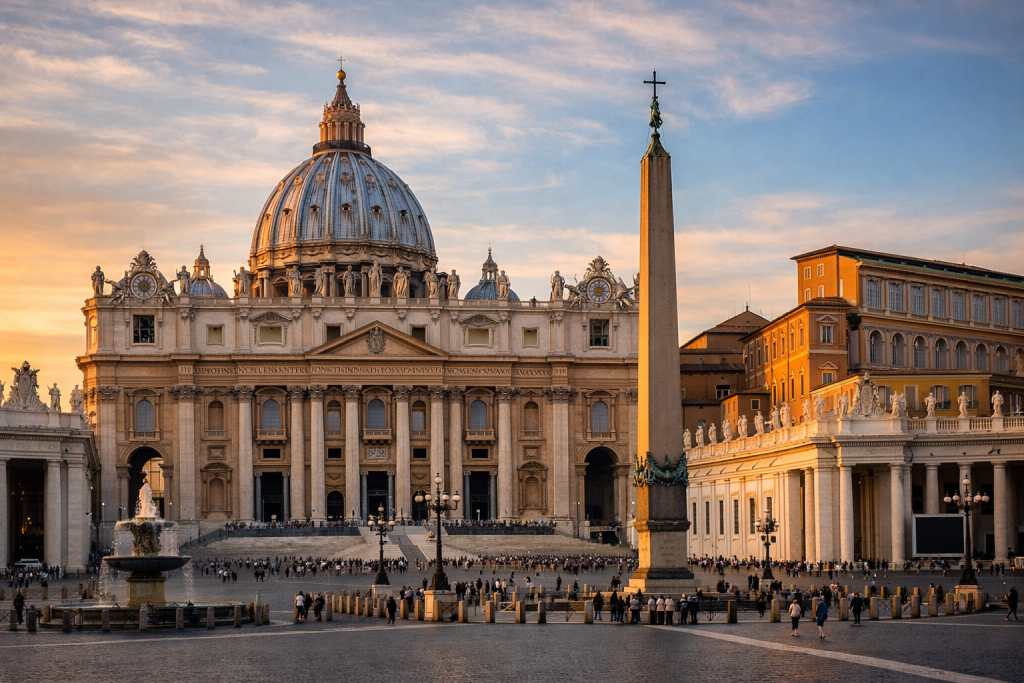
The event traditionally associated with the beginning of the Protestant Reformation occurred in 1517, when the preaching and promotion of indulgences in German territories provoked a challenge from Martin Luther. Pope Leo X had authorized an indulgence campaign associated in part with financing the reconstruction of St. Peter’s Basilica in Rome, while Archbishop Albert of Mainz had financial obligations connected with acquiring ecclesiastical offices. The fundraising arrangement linked religious privileges with substantial financial interests, creating conditions in which indulgences could be aggressively promoted among believers who were concerned about sin, divine punishment, and the fate of loved ones believed to be suffering in purgatory.
The Dominican preacher Johann Tetzel became particularly well known for promoting these indulgences, presenting them as a means through which temporal punishment could be reduced for the living and, under the relevant provisions, for the departed. Although several famous slogans attributed to Tetzel remain subjects of historical debate, the financial connection between indulgences and the remission of temporal punishment was an established feature of the campaign. Many ordinary Christians were encouraged to make contributions in connection with the Church’s promise to apply spiritual benefits, and the emotional appeal of helping deceased family members made the campaign particularly powerful.
Martin Luther, who was serving as an Augustinian monk and professor of biblical theology at the University of Wittenberg, became increasingly concerned about the implications of these practices. His objections involved the pastoral harm caused by encouraging believers to place confidence in indulgences, as well as deeper questions concerning the theological authority upon which the entire system depended. Luther believed that Christians were being directed toward ecclesiastical privileges in ways that obscured genuine repentance and the forgiveness available through Jesus Christ.
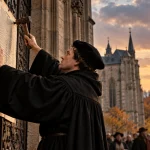
On October 31, 1517, Luther sent his Ninety-Five Theses to Archbishop Albert of Mainz, questioning the theology and administration of indulgences. Tradition also associates that date with Luther publicly posting the theses on the door of the Castle Church in Wittenberg, although historians continue to discuss the evidence surrounding that particular account. Originally intended to invite academic debate, Luther’s propositions were soon translated and circulated widely, drawing attention to a controversy that would rapidly spread beyond the university and become a major challenge to Roman ecclesiastical authority.
At this stage, Luther was still operating within the Roman Catholic Church and had not yet developed every theological conviction that would eventually characterize the Protestant Reformation. His initial concerns focused upon the indulgence system and the need for correction within the existing ecclesiastical structure, but the controversy soon exposed more fundamental disagreements concerning the relationship between Scripture and church authority. If the pope claimed the power to remit temporal punishment through indulgences, Luther wanted to know where Scripture established such authority and whether the Church was justified in binding believers to practices that lacked a clear apostolic foundation.
The controversy over indulgences exposed a deeper theological question that would occupy Luther for years: How can a guilty sinner be declared righteous before a holy God?
Justification Becomes the Central Issue
As the Protestant Reformation gained momentum, the doctrine of justification became the central point of controversy because it concerned the very foundation of a sinner’s relationship with God. Luther and the other Reformers recognized that the disagreements over indulgences, penance, purgatory, and sacramental authority were all connected to a much deeper theological question: How can a sinful human being be declared righteous before a perfectly holy God? The answer would determine how Christians understood salvation, the sufficiency of Christ’s sacrifice, and the assurance that believers could possess concerning their eternal destiny.
To understand the disagreement accurately, we must acknowledge that medieval Roman Catholic theology did not simply teach that sinners could earn salvation through good works performed independently of God’s grace. That would be an inaccurate representation of its position. Catholic theologians affirmed that fallen humanity required divine grace and that no sinner could achieve salvation through natural human effort alone. However, they increasingly understood justifying grace as something infused into the believer, producing an inward transformation through which the sinner actually became righteous. Within this framework, justification involved both the forgiveness of sins and the renewal of the inner person, with the believer’s cooperation playing an important role in the continuing growth of righteousness.
This understanding of salvation was closely connected to the sacramental system that had developed over the preceding centuries. Baptism was regarded as the ordinary means through which initial justifying grace was received, while mortal sin could result in the loss of that grace and the believer’s justified standing before God. The sacrament of penance provided a means of restoration through confession, absolution, and the performance of prescribed acts of satisfaction. Good works performed in a state of grace were understood as contributing to an increase in righteousness, while temporal punishment could remain even after the guilt of sin had been forgiven. Consequently, the believer’s spiritual condition was understood through an ongoing process involving sacramental participation, personal obedience, and cooperation with divine grace.
The Reformers believed that this framework had confused justification with sanctification, two aspects of salvation that Scripture distinguishes even though they are inseparably connected in the life of a genuine Christian. Justification concerns God’s judicial declaration that a sinner is righteous through faith in Jesus Christ, based entirely upon the perfect righteousness of Christ credited to the believer. Sanctification, by comparison, concerns the continuing work of the Holy Spirit in transforming the believer’s character, putting sin to death, and producing obedience to God’s commandments. Both are accomplished through God’s grace, and saving faith inevitably produces good works, but the Reformers insisted that spiritual growth contributes nothing to the legal standing that the believer receives through justification.
The apostle Paul addresses this issue directly in Romans 4:5:
“But to him that worketh not, but believeth on him that justifieth the ungodly, his faith is counted for righteousness.” – Romans 4:5
Paul’s statement is especially significant because he identifies God as the One who justifies the ungodly. The sinner does not first achieve a sufficient degree of inward righteousness before becoming acceptable to God. Instead, God credits righteousness to the individual who trusts in Christ, granting a righteous standing that rests upon the obedience and sacrifice of the Saviour. This understanding is reinforced in Romans 5:1, where Paul declares that believers, “being justified by faith,” possess peace with God through Jesus Christ. For the Reformers, justification was therefore a definitive act of God, grounded in Christ’s finished work and received through faith, rather than a spiritual condition that increased or decreased according to the believer’s personal progress in holiness.
The Reformers located the ground of acceptance before God in Christ’s righteousness credited to the believer; Rome included righteousness imparted and renewed within the believer in justification itself. That disagreement would shape the coming debates over Christian assurance and the decrees of Trent.
The Problem of Assurance
The medieval Roman Catholic understanding of justification also created a serious pastoral problem concerning assurance of salvation. If the believer’s standing before God depended partly upon an inward righteousness that could increase through obedience or be lost through mortal sin, then Christians faced considerable uncertainty about their spiritual condition. A person who genuinely desired to please God might reasonably wonder whether his repentance had been sincere enough, whether every serious sin had been properly confessed, or whether his efforts to cooperate with grace had been sufficient. Even after receiving absolution, the possibility of remaining temporal punishment introduced further questions about what awaited the believer after death and how much purification might still be required in purgatory.
These concerns were especially troubling for those who possessed a deep awareness of their own sinfulness. Scripture teaches that God is perfectly holy and that even the most mature Christians continue to struggle with sin, making the prospect of attaining sufficient inward righteousness a deeply unsettling one. If a person’s final acceptance before God depended upon the degree of holiness achieved during earthly life, how could anyone possess lasting confidence that he had done enough? The sacramental system offered repeated opportunities for confession, penance, and restoration, but the underlying uncertainty remained because the believer’s spiritual condition was understood as something that could change throughout life.
Martin Luther’s personal experience illustrated the seriousness of this problem. During his years as an Augustinian monk, Luther devoted himself to rigorous religious discipline, frequent confession, prayer, fasting, and the careful examination of his own conscience. He was deeply troubled by the holiness of God and the reality of his own sin, and his efforts to obtain peace through religious observance only increased his awareness of the sinful motives and desires that remained within him. The more closely he examined his heart, the more difficult it became to find assurance that his repentance and obedience were sufficient.
Luther’s struggle was rooted in a theological system that he had been taught to accept, and he took its implications seriously. If justification depended upon righteousness being progressively formed within him, he could never be certain that he possessed enough righteousness to stand before God’s judgment. Every attempt to examine his spiritual condition revealed further deficiencies, and every effort to improve his religious performance seemed to expose additional reasons for condemnation. For a man who understood the seriousness of sin and the perfect justice of God, this produced profound spiritual anxiety.
The turning point came through Luther’s growing understanding of the biblical doctrine of justification, particularly as he studied Paul’s teaching in Romans and Galatians. He came to recognize that the righteousness by which sinners are accepted before God is found in Jesus Christ, whose perfect obedience and sacrificial death fully satisfy the demands of divine justice. The sinner receives this righteousness through faith, trusting in the completed work of Christ rather than attempting to establish an acceptable standing before God through personal merit or religious performance. Justification therefore provides a settled verdict of righteousness for the believer, even while the ongoing work of sanctification continues throughout the Christian life.
Christ’s obedience, suffering, and atoning sacrifice provide the complete foundation of the believer’s justification.
This conviction transformed the Reformers’ understanding of Christian assurance. They taught that genuine believers could possess confidence before God because their acceptance rested upon the finished work of Jesus Christ, whose righteousness is perfect and whose sacrifice is sufficient to secure the forgiveness of sins. Such assurance did not mean that Christians would never struggle with doubt, fall into sin, or experience seasons of spiritual weakness. The Reformers acknowledged that believers must continually repent, pursue holiness, and depend upon the transforming work of the Holy Spirit. Nevertheless, they maintained that the believer’s imperfect progress in sanctification could never provide the foundation for justification, since that foundation had already been established through Christ’s perfect obedience and atoning death.
Paul’s words in Romans 8:1 express the confidence that follows from this understanding of salvation: “There is therefore now no condemnation to them which are in Christ Jesus.” The believer’s peace with God rests upon the righteousness of the Saviour rather than the fluctuating quality of personal obedience, providing an objective foundation for assurance even while the Christian continues to struggle against sin. Because justification is God’s gracious declaration concerning those who are united to Christ by faith, the Christian can look beyond personal failures and trust in the sufficiency of the One who has accomplished redemption.
For Luther, the question of peace with God had become intensely personal; the answer he found in the promises of Christ carried him into an increasingly public controversy over the source of doctrinal authority.
Authority: Who Has the Final Word?
As the Protestant Reformation progressed, the controversy surrounding salvation inevitably developed into a much larger debate concerning the nature and limits of church authority. Martin Luther and the other Reformers recognized that their arguments concerning justification, indulgences, and sacramental theology ultimately depended upon a more fundamental question: Who possesses the final authority to determine what Christians must believe? If the Roman Catholic Church possessed an infallible teaching office with the authority to define Christian doctrine independently of correction from Scripture, then the Reformers’ appeals to passages such as Romans 3:28, Romans 4:5, and Galatians 2:16 could be dismissed whenever those passages conflicted with established ecclesiastical teaching.
This problem became increasingly apparent as Luther challenged doctrines and practices that had received official approval from Rome. Catholic theologians appealed to papal authority, church councils, and longstanding traditions, while Luther insisted that every theological claim must ultimately be examined according to the inspired Scriptures. The dispute became especially significant at the Diet of Worms in 1521, where Luther refused to recant unless he could be convinced of his errors through Scripture or clear reasoning. He maintained that popes and councils had sometimes contradicted one another and could therefore be mistaken, making it impossible for him to surrender his conscience to ecclesiastical authority when he believed that authority conflicted with God’s Word.
Out of this controversy emerged the Reformation principle commonly known as Sola Scriptura, meaning “Scripture alone.” This doctrine affirms that the Bible is the only inspired and infallible rule of faith for the Christian Church, possessing an authority that no pope, council, denomination, or theological tradition can equal. Because Scripture comes from God Himself, as affirmed in 2 Timothy 3:16-17, its teaching remains the final standard by which all other religious claims must be evaluated. The Reformers believed that placing any human institution above the corrective authority of Scripture effectively removed the Church’s ability to recognize and repent of its own doctrinal errors.
An important clarification is necessary here, because Sola Scriptura is frequently misrepresented as a rejection of church history, pastoral authority, theological scholarship, or the historic creeds of Christianity. The Reformers did not advocate such an approach. They valued the writings of the early church fathers, defended the ancient ecumenical creeds, respected the legitimate authority of church officers, and recognized that councils could provide valuable clarification during periods of doctrinal controversy. Luther and Calvin themselves appealed extensively to earlier Christian theologians, particularly Augustine, when explaining and defending their positions.
The essential qualification was that every human authority remained accountable to Scripture. Pastors were responsible to teach what God had revealed, councils were obligated to formulate doctrines consistent with apostolic teaching, and churches were expected to preserve the Gospel rather than introduce additional requirements that God had never commanded. Even widely accepted traditions could be corrected when careful biblical examination demonstrated that they had departed from the truth. The apostle Paul provided an important example of this principle in Galatians 1:8-9, where he warned that anyone proclaiming a gospel contrary to the one already preached by the apostles was to be accursed, even if the messenger were an angel from heaven. The authority of the message rested upon its divine origin rather than the position, reputation, or institutional standing of the person delivering it.
This understanding of authority stood in serious tension with Rome’s developing conception of the Church’s teaching office, commonly called the Magisterium. Roman Catholic theology maintained that Scripture must be interpreted within the authoritative tradition of the Church and that the bishops in communion with the pope possessed a divinely established responsibility to provide binding interpretations of Christian doctrine. Although Rome also affirmed Scripture as inspired and authoritative, it rejected the Protestant conviction that Scripture alone constituted the Church’s final infallible rule of faith. The disagreement consequently involved the very means by which Christians could determine whether a church’s teaching was faithful to the apostles.
For the Reformers, accepting Rome’s claims would have meant surrendering the possibility of appealing to Scripture as the final court of correction against official Roman doctrine. If the same institution accused of teaching error also possessed the ultimate authority to determine whether the accusation was valid, then meaningful doctrinal reform became extraordinarily difficult. The Reformers therefore insisted that the Church must always remain subject to the authority of God’s written Word, including when that Word challenges doctrines the Church has defended for centuries.
1545–1563: The Council of Trent
The theological conflict between Rome and the Protestant Reformers reached one of its most consequential turning points at the Council of Trent, which convened intermittently between 1545 and 1563. Called during the pontificate of Pope Paul III, the council was intended to address the growing Protestant movement, clarify disputed doctrines, and correct serious problems within the Roman Catholic Church. By this point, the Reformation had spread throughout significant portions of Europe, and questions concerning justification, the sacraments, biblical authority, and ecclesiastical corruption had become impossible for Rome to ignore.
To be historically fair, Trent did address genuine abuses and initiate meaningful internal reforms. The council sought to improve the education and discipline of the clergy, correct certain corrupt financial practices, strengthen episcopal oversight, and establish better standards for pastoral ministry. Its later decrees concerning seminaries contributed significantly to the formal training of Roman Catholic priests. These reforms were substantial, and Protestants should acknowledge that the Catholic Church recognized the existence of serious institutional problems that required correction.
However, the council’s decisions concerning the central theological disagreements of the Reformation moved in a very different direction. Rather than accepting the Reformers’ understanding of justification and the authority of Scripture, Trent formally reaffirmed Roman Catholic teachings and condemned several doctrines that Protestants believed were essential to the biblical Gospel. The council therefore became a decisive moment in the separation between the two traditions, establishing official doctrinal boundaries that extended far beyond disagreements over clerical conduct or administrative corruption.
Trent’s treatment of Scripture made the disagreement over authority explicit. At its Fourth Session on April 8, 1546, the council received the books of the Old and New Testaments together with unwritten traditions believed to have originated with Christ or the apostles, declaring that both should be received with equal reverence. It also issued an authoritative list of biblical books, including Tobit, Judith, Wisdom, Sirach, Baruch, and 1 and 2 Maccabees, which Protestants generally classify among the Apocrypha or deuterocanonical writings. Disagreements about these books had long preceded Trent, and Christians had not held a single uniform position about all of them throughout antiquity. Nevertheless, Trent’s decree sharply defined another boundary: Protestants denied that the Church could settle the content and interpretation of divine revelation by an ecclesiastical declaration that was itself insulated from Scripture’s correction.
This decision also provides a needed qualification about Sola Scriptura. The Reformers were not suggesting that the Bible fell from heaven with a table of contents attached or that identifying the canon involved no history. They acknowledged the Church’s role in recognizing and receiving the apostolic writings. Their objection was to treating the Church’s recognition as the source of Scripture’s authority. On their account, the canonical books possess authority because God inspired them; the Church is responsible to recognize and receive that authority faithfully.
The most significant decision concerning salvation came during Session VI on January 13, 1547, when the council adopted its Decree on Justification. This document provided a systematic explanation of the Roman Catholic understanding of how sinners are justified before God, emphasizing the necessity of divine grace while also teaching that justification involves the believer’s inward renewal through righteousness imparted by God. Baptism was identified as the instrumental cause of initial justification, while the believer’s subsequent growth in righteousness was connected with cooperation with grace and obedience to God’s commandments. According to this framework, justification involved a genuine transformation within the individual, and that righteousness could increase during the Christian life.
The Reformers understood justification differently, teaching that God declares the sinner righteous through faith in Jesus Christ because Christ’s righteousness is credited to the believer. Although they strongly affirmed that genuine faith produces spiritual transformation and good works, they distinguished that continuing work of sanctification from the act of justification itself. This disagreement involved the very basis upon which a guilty sinner could stand accepted before a holy God, making compromise extremely difficult without one side abandoning what it believed Scripture plainly taught.
Following its decree, Trent issued a series of canons condemning specific positions associated with Protestant theology. Several of these directly addressed the doctrines that Luther, Calvin, and other Reformers had defended from the writings of Paul.
Canon 9 condemned the teaching that sinners are justified by faith alone when understood to exclude any necessary cooperation in receiving the grace of justification. This stood against the Reformation doctrine of Sola Fide, which maintained that faith is the sole instrument through which sinners receive God’s justifying grace, apart from works contributing to their righteous standing before Him.
Canon 11 rejected the idea that justification consists solely in the imputation of Christ’s righteousness or the remission of sins to the exclusion of grace and charity poured into the believer’s heart. This represented a direct rejection of the Protestant distinction between the righteousness credited to the believer in justification and the inward moral transformation accomplished through sanctification.
Canon 24 condemned the position that good works are merely the fruits and signs of justification without also contributing to the increase of righteousness already received. The Reformers, by contrast, insisted that good works necessarily follow genuine saving faith but do not increase the believer’s justified standing before God. They viewed obedience as the evidence of God’s saving work rather than a means of improving the judicial verdict already pronounced upon the believer through Christ.
Finally, Canon 30 defended the teaching that temporal punishment may remain after the guilt of sin has been forgiven, including punishment that must be endured in purgatory. This directly contradicted the Reformers’ conviction that Christ’s finished sacrifice provides complete satisfaction for the believer’s sins and that those justified through faith possess peace with God on the basis of His accomplished redemption.
These declarations demonstrate the seriousness of the theological division. The Roman Catholic Church had now officially condemned central elements of the Protestant understanding of salvation, including the doctrines of justification by faith alone and the imputation of Christ’s righteousness. The disagreement could no longer be explained primarily as a controversy over poorly educated priests, financial exploitation, or the abusive promotion of indulgences. Those problems had helped provoke the Reformation, but the dispute had grown into a fundamental conflict over the nature of justification and the authority by which Christian doctrine was to be established.
The decisions of Trent also make it difficult to maintain that the Reformation resulted simply from mutual misunderstanding. Rome’s theologians had spent decades studying, debating, and responding to Protestant teaching, while the Reformers had carefully examined and criticized the doctrinal positions defended by Rome. Both sides understood that they differed concerning the relationship between faith, grace, works, and justification, and the council’s formal condemnations made those differences unmistakable. The Roman Catholic Church remained committed to its understanding of salvation, while the Protestant Reformers remained convinced that the apostle Paul’s teaching required the doctrine of justification by faith alone.
By formally condemning these Protestant doctrines, the Council of Trent established a lasting theological division between Rome and the Reformation. Although disagreements had existed for decades before the council convened, Trent gave official and enduring expression to Rome’s rejection of central Reformation teachings. Any reconciliation would consequently require confronting those doctrinal condemnations and the underlying disagreement over the authority of Scripture.
From the Protestant perspective, this was among the clearest demonstrations of why the Reformation had become necessary. The Reformers believed that the Gospel taught by the apostles had been obscured by a theological system that connected justification with inward righteousness, sacramental participation, and human cooperation with grace. When confronted with biblical arguments calling that system into question, Rome chose to defend its doctrinal framework through formal conciliar definitions. The resulting separation reflected convictions concerning the very heart of the Christian Gospel, and those convictions continue to distinguish Roman Catholicism from confessional Protestant Christianity today.
Rome Continued to Define New Dogmas
The Council of Trent did not mark the end of Roman doctrinal development.
Several teachings that Protestants reject were not formally defined as dogma until centuries after the Reformation.
These later definitions help demonstrate the deeper authority problem identified by the Reformers.
1854: The Immaculate Conception of Mary
On December 8, 1854, Pope Pius IX issued the apostolic constitution Ineffabilis Deus, formally declaring the Immaculate Conception of Mary to be a divinely revealed dogma of the Roman Catholic Church. According to this teaching, Mary was preserved from the stain of original sin from the very first moment of her conception through a unique application of the merits of Jesus Christ. Although versions of this belief had circulated and been debated among Catholic theologians for centuries, the papal declaration elevated it to the status of an official doctrine that all Roman Catholics were required to accept as a truth revealed by God.
It is important to understand what this doctrine actually teaches, since the Immaculate Conception is frequently confused with the virgin birth of Jesus Christ. The biblical account of the virgin birth concerns the miraculous conception of Jesus in Mary’s womb through the power of the Holy Spirit, as recorded in Matthew 1:18-25 and Luke 1:26-35. Protestants wholeheartedly affirm this miracle because Scripture explicitly teaches it. The Immaculate Conception, however, concerns Mary’s own conception by her parents, traditionally identified as Joachim and Anne, and maintains that she was uniquely preserved from original sin throughout her entire existence.
The difficulty with this teaching becomes apparent when we examine the biblical evidence. Nowhere does Scripture explicitly state that Mary was conceived without original sin, nor do the apostles instruct Christians to believe that she received such an extraordinary exemption from humanity’s fallen condition. Roman Catholic theologians commonly appeal to passages such as Luke 1:28, where Gabriel greets Mary as one who is highly favored, but Protestants have historically rejected the claim that this language establishes her sinless conception. Being specially favored by God does not, by itself, demonstrate that a person was conceived without original sin or remained entirely free from sin.
Scripture certainly presents Mary as a remarkable woman of faith who was graciously chosen by God to bear the incarnate Son. Her humble submission to God’s will in Luke 1:38 deserves our admiration, and her declaration in Luke 1:46-47 that her spirit rejoices in “God my Saviour” reveals her own dependence upon divine grace. Yet none of these passages establishes the doctrine that Pius IX declared binding upon the entire Roman Catholic Church in 1854.
From a Protestant perspective, this raises a serious question concerning the limits of ecclesiastical authority. A doctrine that had been debated for centuries, and for which no explicit apostolic teaching can be produced, was eventually declared to be divinely revealed truth that every faithful Roman Catholic must believe. This illustrates the very concern that had troubled the Reformers: by what biblical authority can the Church require Christians to accept a doctrine that cannot be established from the inspired Scriptures?
1870: Papal Infallibility
An even more consequential development occurred during the First Vatican Council, which convened from 1869 to 1870 under Pope Pius IX. On July 18, 1870, the council promulgated the dogmatic constitution Pastor Aeternus, formally defining the doctrine of papal infallibility. This declaration represented the culmination of centuries of developing claims concerning the authority of the bishop of Rome and established a specific understanding of papal teaching authority as binding Roman Catholic dogma.
According to the definition adopted at Vatican I, the pope is protected from error when he speaks ex cathedra, meaning that he acts in his official capacity as the supreme pastor and teacher of all Christians and definitively proclaims a doctrine concerning faith or morals that must be held by the universal Church. Roman Catholic theology does not claim that the pope is personally sinless or that every statement he makes is infallible. Rather, it teaches that under these particular conditions, the Holy Spirit preserves his doctrinal definition from error, granting it an authority that does not depend upon subsequent approval from other bishops or members of the Church.
Although Catholic theologians argue that this authority was present from the beginning of Christianity and became more clearly understood over time, the doctrine was formally defined many centuries after the apostolic period. The New Testament provides no explicit statement that Peter, much less every future bishop of Rome, would possess the ability to issue infallible doctrinal definitions for the universal Church. Peter certainly occupied an important position among the apostles, but his authority does not establish the entire structure of papal infallibility that Vatican I eventually defined.
One particularly relevant passage is Galatians 2:11-14, where the apostle Paul publicly confronted Peter at Antioch because his conduct was inconsistent with the truth of the Gospel. Peter had withdrawn from eating with Gentile believers out of fear of those associated with the circumcision party, and his behavior influenced other Jewish Christians, including Barnabas. Paul recognized the seriousness of this compromise and rebuked Peter openly. Although Roman Catholic theologians correctly distinguish Peter’s personal conduct from the narrowly defined conditions of an ex cathedra pronouncement, the passage nevertheless demonstrates that Peter himself was accountable to the truth of the Gospel and could be corrected when his actions departed from it.
The broader biblical problem concerns the absence of any apostolic teaching establishing an infallible succession of Roman bishops. The New Testament identifies Scripture as God-breathed and sufficient to equip the man of God for every good work (2 Timothy 3:16-17), while repeatedly warning believers to test teaching against the revelation they have received. Even the apostle Paul declared in Galatians 1:8-9 that anyone preaching a gospel contrary to the one already delivered was to be accursed, regardless of the messenger’s apparent authority.
The definition of papal infallibility therefore raises serious concerns for Protestants who hold to Sola Scriptura. By declaring that the pope can issue irreformable doctrinal definitions under specified conditions, Rome formally established an authority claim that Protestants believe cannot be demonstrated from Scripture. Following Vatican I, rejection of this teaching meant rejecting a doctrine the Roman Catholic Church regarded as divinely revealed and obligatory for its members.
1950: The Bodily Assumption of Mary
The formal definition of additional Roman Catholic doctrines continued well into the twentieth century. On November 1, 1950, Pope Pius XII issued the apostolic constitution Munificentissimus Deus, declaring the bodily Assumption of Mary to be a divinely revealed dogma. According to this teaching, Mary, having completed the course of her earthly life, was taken body and soul into heavenly glory. The declaration deliberately did not settle whether Mary had physically died before her assumption, leaving that particular question open within Roman Catholic theology.
Belief in Mary’s assumption had existed in various forms for many centuries, particularly through devotional traditions and accounts that developed in the post-apostolic Church. Over time, the teaching became increasingly prominent in both Eastern and Western Christian traditions, although differences remained concerning its precise meaning and theological implications. By the middle of the twentieth century, Rome determined that the belief should be formally defined as a doctrine revealed by God and binding upon the faithful.
Yet when we examine the New Testament, we find no account of Mary’s bodily assumption into heaven. Scripture provides substantial historical testimony concerning the resurrection of Jesus Christ, records His ascension in Acts 1:9-11, and contains extensive apostolic teaching concerning the future bodily resurrection of believers. The New Testament also records the deaths of several important figures in the early Church, including Stephen and James. However, it gives no description of Mary’s departure from this world and offers no apostolic explanation suggesting that she received a unique bodily glorification ahead of the general resurrection.
This silence is especially significant because the Assumption was eventually declared to be a divinely revealed truth that Christians were required to believe. Roman Catholic defenders acknowledge that Scripture contains no direct historical narrative of Mary’s assumption, but argue that the doctrine belongs to the apostolic tradition preserved and interpreted by the Church. Protestants reject that reasoning because it requires accepting the Church’s claim to possess binding revelation that cannot be independently established from the written Word of God.
The issue reaches beyond the particular question of what happened to Mary at the conclusion of her earthly life. It concerns the Church’s claimed authority to define events and doctrines as divinely revealed despite the absence of explicit biblical testimony. If an ecclesiastical institution can declare such teachings obligatory on the basis of its own understanding of tradition, Christians must ask what meaningful limits remain upon that institution’s ability to establish additional requirements for belief.
The Assumption of Mary is therefore another illustration of the fundamental disagreement between Roman Catholicism and Protestant Christianity concerning doctrinal authority. Rome maintains that its teaching office, under the guidance of the Holy Spirit, can infallibly define truths contained within the apostolic deposit of faith, even when those truths are not explicitly stated in Scripture. The Protestant position insists that the Church must demonstrate its doctrines from the inspired Scriptures rather than require believers to accept them on the authority of later ecclesiastical declarations.
The central question remains whether any church possesses the God-given authority to bind the consciences of Christians to doctrines that the apostles themselves never clearly taught. For those who affirm Sola Scriptura, the answer must be determined by the authority of God’s written Word, regardless of how ancient, influential, or widely accepted a particular religious tradition may have become.
The Reformers Were Not Restorationists
One important distinction that often gets overlooked in discussions about the Protestant Reformation is the difference between reforming an existing church and attempting to restore a church that supposedly disappeared from the earth. Protestantism belongs firmly in the former category, which is why it should never be confused with restorationist movements such as Mormonism. Although both movements challenged established religious institutions, their understanding of Christian history, biblical authority, and the preservation of Christ’s Church could hardly have been more different.
Joseph Smith, the founder of Mormonism, claimed that the existing Christian churches had fallen into a state of general apostasy, having lost the priesthood authority and essential truths necessary to represent authentic Christianity. According to Smith, this widespread corruption required God to restore the true Church through new prophetic revelation, additional scriptures, and a renewed religious authority structure. The Church of Jesus Christ of Latter-day Saints consequently traces its establishment to Smith’s prophetic claims in the nineteenth century, maintaining that the original Church had to be restored because its authority had been lost.
The sixteenth-century Protestant Reformers approached the problem from a fundamentally different perspective. Martin Luther, John Calvin, Ulrich Zwingli, and other leading Reformers believed that Jesus Christ had faithfully preserved His Church throughout the centuries, even while serious theological errors and institutional corruption had developed within it. They acknowledged the existence of genuine Christian believers long before the Reformation and recognized that the historical Church had preserved many essential doctrines of biblical Christianity. Their objections were directed toward teachings and practices that had accumulated over time and, in their judgment, departed from the doctrines originally delivered by Christ and His apostles.
For this reason, the Reformers never claimed to possess a new prophetic revelation or an additional collection of inspired writings that would supersede the Scriptures already received by the Church. Instead, they returned repeatedly to the biblical text, studying the writings of the apostles in their original languages and examining how earlier generations of Christians had understood those teachings. They drew extensively upon early church fathers such as Augustine, Athanasius, and John Chrysostom, even when they disagreed with particular interpretations or practices found in those writers. They also continued to affirm the foundational doctrines expressed in the ancient ecumenical creeds, including the Trinity, the full deity and humanity of Jesus Christ, His bodily resurrection, and the essential truths concerning His saving work.
The Reformers understood that church history was valuable and that Christians should learn from those who had gone before them. They recognized the importance of established theological terminology, historic confessions, and the collective wisdom of faithful Christian teachers, while insisting that every doctrine and ecclesiastical practice must ultimately be judged according to the inspired Word of God. When inherited traditions faithfully reflected biblical teaching, the Reformers had every reason to retain them. When those traditions contradicted Scripture or imposed religious obligations that the apostles had never commanded, they believed the Church had a responsibility to correct or abandon them.
This conviction explains why the Reformation should be understood as a call for the recovery of biblical doctrine within the historic Christian Church. The Reformers believed that the Gospel had been increasingly obscured by centuries of theological additions and institutional developments, especially those concerning justification, sacramental mediation, and papal authority. Their objective was to bring the Church’s teaching and practice back into conformity with the apostolic faith that had already been revealed and preserved in Scripture.
The Protestant Reformers were not claiming to restore a lost church. They were calling an existing church back to the authority of Scripture and the Gospel, trusting that Christ had preserved His people even through centuries of serious doctrinal corruption.
Matthew 16 and the Gates of Hell
Roman Catholic apologists frequently appeal to Jesus’ promise in Matthew 16:18, where He declares, “I will build my church; and the gates of hell shall not prevail against it.” From their perspective, this passage supports the conviction that Christ established a visible Church whose essential teaching authority would remain protected from error throughout history. Consequently, they argue that the Protestant rejection of papal supremacy and other Roman Catholic doctrines conflicts with Christ’s promise to preserve His Church. If Rome had fallen into serious doctrinal error, the argument goes, then Christ’s promise of preservation would appear to have failed.
Protestants should have no difficulty affirming the actual promise Christ made. The Church belongs to Jesus Christ, who purchased His people with His own blood and continues to sustain them through every generation. His declaration in Matthew 16:18 guarantees that His Church will endure despite persecution, opposition, and the efforts of Satan to destroy it. However, the passage does not establish that every visible church institution will remain free from doctrinal corruption, nor does it identify the bishop of Rome and his successors as possessing an infallible teaching office. Those additional claims must be demonstrated from Scripture rather than assumed from Christ’s promise concerning the endurance of His Church.
The New Testament itself provides numerous examples of churches that had departed from sound doctrine or tolerated serious sin. In Revelation 2 and 3, Jesus directly rebuked several congregations for their spiritual compromise, false teaching, and failure to remain faithful to His commands. The church at Ephesus was warned that its lampstand could be removed unless it repented, while the congregations at Pergamum and Thyatira were condemned for tolerating teachings that encouraged immorality and idolatry. These were actual Christian churches, addressed by the risen Christ Himself, yet their existence as recognized congregations did not guarantee their continued faithfulness or protect them from divine judgment.
The apostle Paul offered similar warnings when addressing the elders of the Ephesian church in Acts 20:28-30. He instructed them to watch carefully over the flock because savage wolves would enter among them and because false teachers would eventually arise from within their own leadership, drawing disciples away from the truth. His warnings in Galatians 1:6-9 were equally severe, pronouncing a curse upon anyone who proclaimed a gospel contrary to the one the apostles had originally preached. Paul even included himself and the angels of heaven within the scope of that warning, demonstrating that the truthfulness of the Gospel was to be judged by the apostolic message already delivered rather than by the prestige or supposed authority of the messenger.
These passages establish that visible churches can depart from biblical teaching, sometimes in ways serious enough to threaten their very existence as faithful congregations of Christ. Their historical continuity, recognized leadership, or institutional influence provides no guarantee against corruption. If the churches founded and instructed by the apostles themselves were subject to such warnings, we have no biblical reason to assume that a particular ecclesiastical institution established in subsequent centuries would be automatically exempt from the same dangers.
Christ’s promise that the gates of hell will never prevail against His Church therefore gives Christians confidence that the true Church will endure, even when individual congregations, denominations, or powerful religious institutions fall into serious error. God has preserved His people through periods of persecution, doctrinal controversy, ecclesiastical corruption, and institutional division, often raising up faithful pastors and teachers to confront false doctrine and call believers back to the truth of His Word.
Seen in this light, the Protestant Reformation can be understood as one historical expression of Christ’s continuing care for His Church. The Reformers believed they were defending the Gospel against teachings that had gradually obscured it, and their appeal to Scripture reflected their conviction that Christ governs His people through the Word He has given them. The Church’s continued existence rests upon the faithfulness of its risen Lord, who remains perfectly capable of preserving His people while correcting the errors of the institutions that claim to represent Him.
So When Did Rome “Go Wrong”?
Readers sometimes ask for the date when the Roman Catholic Church departed from biblical Christianity, as though one council or papal decree explains the entire history. The record supplies no such single turning point. The evolution of papal jurisdiction, the medieval penitential system, the doctrinal definition of purgatory, and the increasingly formal theology of indulgences occurred over centuries. Some ideas were disputed long before they were made official. Others had become normal features of Christian life before anyone produced a systematic explanation of them.
The key landmarks now form a recognizable progression: expansive papal claims in 1075 and 1302; sacramental requirements at Lateran IV in 1215; the articulation of the treasury of merit in 1343; Luther’s protest in 1517; and Trent’s formal rejection of crucial Protestant positions in 1547. The later dogmatic definitions concerning Mary and papal infallibility illustrate that Roman Catholic doctrinal development continued after the Reformation. Their lateness alone does not prove them false, since older beliefs can receive later definitions. The more searching question is whether those beliefs genuinely come from the revelation Christ entrusted to His apostles and whether Scripture authorizes a church to require assent to them.
That question has a biblical answer for those who affirm Sola Scriptura. No pope, council, church father, or confession may add an article of faith that binds every Christian without warrant from the Word of God. The history of the Reformation should therefore drive us beyond indignation over medieval abuses and toward careful examination of the doctrines we ourselves are willing to defend. Where did the apostles teach them? That is the question to which every Christian tradition must return.
Conclusion: Why the Reformation Was Necessary
The Protestant Reformation arose from the conviction that the Roman Catholic Church had accumulated serious doctrinal errors over many centuries, particularly concerning salvation and the authority by which Christian doctrine must be established. This does not require us to deny the genuine Christian truths that Rome preserved throughout its history. Roman Catholicism continued to affirm the Trinity, the full deity and humanity of Jesus Christ, His bodily resurrection, and numerous other foundational doctrines taught in Scripture. The Church also preserved and transmitted the biblical writings, and there is good reason to believe that genuine Christians lived and died within its congregations throughout the centuries. Nevertheless, the preservation of essential Christian doctrines does not excuse the introduction of additional teachings that obscure the Gospel or impose obligations upon believers that God Himself has never commanded.
By the beginning of the sixteenth century, the theological system of Western Christianity had developed considerably beyond what we find in the New Testament. Papal authority had expanded into claims of universal jurisdiction, the sacramental system had become increasingly elaborate, and doctrines concerning purgatory, indulgences, and the treasury of merit had become integral parts of Roman Catholic religious life. Most seriously, the doctrine of justification had developed into a framework in which righteousness was understood as being infused into the believer and increased through cooperation with grace, rather than justification being understood as God’s judicial declaration that the sinner is righteous through faith in Jesus Christ, on the basis of His righteousness alone. These differences directly affected how Christians understood forgiveness, assurance of salvation, and the sufficiency of Christ’s finished work. When the Reformers challenged these teachings from Scripture, Rome responded through the Council of Trent by formally defending its doctrinal system and condemning central aspects of the Protestant teaching on justification. The resulting separation was consequently rooted in serious theological disagreements that could not be resolved simply by correcting corruption among the clergy or improving the administration of church affairs.
There is also a warning in this history that every Protestant church should take seriously. Ecclesiastical error is hardly a problem unique to Roman Catholicism, and Christians would be foolish to assume that their own churches are somehow immune to doctrinal corruption simply because they identify with the Reformation. Respected pastors can misinterpret Scripture, denominations can gradually embrace unbiblical practices, and theological traditions can acquire such influence that people begin defending inherited positions without seriously examining whether those positions are faithful to God’s Word. The age of a doctrine, the popularity of a teaching, or the reputation of the institution promoting it cannot establish its truthfulness. The Church must continually examine what it teaches in light of Scripture, remaining willing to correct even long-standing practices when they are found to contradict the revelation God has given us.
The Reformers expressed this continuing responsibility through the principle commonly summarized as semper reformanda, meaning that the Church must always be undergoing reform according to the Word of God. Although the expression became associated with the Reformed tradition after the sixteenth-century Reformation, the underlying conviction is thoroughly biblical. Every generation of Christians must guard against allowing human traditions, institutional loyalties, or theological preferences to assume an authority that belongs to Scripture alone. We cannot reasonably call Roman Catholics to examine their doctrines against the Bible while refusing to subject our own churches and cherished traditions to that same standard. Such examination requires humility, a willingness to be corrected, and an unwavering commitment to receiving God’s Word as the final authority over everything we believe and teach.
Ultimately, the necessity of the Protestant Reformation rests upon the conviction that the Gospel entrusted to the apostles must never be altered, supplemented, or obscured by teachings that cannot be established from Scripture. Jesus Christ remains the only Head of His Church, and His people are responsible to follow the truth He has revealed rather than grant any earthly institution authority to redefine it. The history of the Reformation reminds us how easily doctrinal errors can accumulate when church tradition is allowed to govern the interpretation of Scripture without being genuinely accountable to it. For that reason, the work of examining our beliefs, correcting our errors, and bringing the Church into greater conformity with God’s Word must continue in every generation, until Christ Himself returns for the people He has redeemed.
Historical Sources and Further Reading
The historical documents below allow readers to examine the official language and decisions discussed in this article. Their inclusion does not imply agreement with the theological conclusions of the bodies that issued them.
- Fourth Lateran Council (1215): Canons, especially Canons 1 and 21.
- St Andrews Encyclopaedia of Theology: Purgatory in Historical Perspective, including the medieval treasury of merit and indulgences.
- Council of Constance (1415): Sacrosancta, concerning authority during the Western Schism.
- Council of Trent (1546): Decree Concerning the Canonical Scriptures.
- Council of Trent (1547): Decree and Canons on Justification.
- First Vatican Council (1870): Pastor Aeternus.
- Pius XII (1950): Munificentissimus Deus.
- Eamon Duffy: discussion of single-bishop leadership in first-century Rome.
- First Council of Nicaea (325), Canons 4 and 6.
- Encyclopaedia Britannica: History of cardinals.
- Decree of 1059 on papal elections.
- Third Lateran Council (1179), decree on papal elections.