A Dialogue About Abortion
Can two people who strongly disagree about abortion have a thoughtful, respectful conversation without shouting at each other? What happens when we set aside political slogans and begin asking deeper questions about human life, bodily autonomy, morality, and our responsibility toward the unborn?
Abortion is one of the most emotionally charged subjects in our culture. Mention it in a conversation, and people often retreat into their respective corners before anyone has even finished speaking. One side accuses the other of hating women, while the other accuses its opponents of supporting the killing of innocent children. Before long, the conversation becomes a shouting match, and very little is accomplished.
But what if we approached the subject differently?
As Christians, we’re called to speak the truth in love (Ephesians 4:15), to be gentle and respectful when defending our beliefs (1 Peter 3:15), and to treat others with dignity, even when we strongly disagree with them.
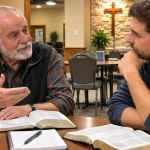
The following is a fictional conversation between two friends, Daniel, a Christian who believes abortion is morally wrong, and Rachel, a non-Christian who supports abortion rights. Neither is interested in winning an argument at the expense of the other. Both are willing to ask difficult questions and listen carefully to the answers.
Keep in mind that this is a best-case scenario. It is rare that either side – either the Christian or non-Christian – won’t get emotional, succumb to logical fallacies, or just engage in ad hominem attacks. I’ve presented the below like it is so that you get a clearer view of the arguments that both sides have for their beliefs.
Also, I’ve sectioned it to show what someone who is anti-abortion would respond to common pro-choice arguements, such as “It’s My Body, My Choice,” “A Fetus Isn’t a Person Yet,” and others.
Daniel and Rachel’s conversation begins over coffee.
“It’s My Body, My Choice”
Rachel: Daniel, can I ask you something? I saw something you posted about abortion the other day. You really believe it should be illegal?
Daniel: Generally speaking, yes. I believe unborn children deserve legal protection. But I also recognize there are difficult medical situations that require careful consideration. Why do you ask?
Rachel: Because I honestly don’t understand how you can think the government should tell a woman what she can do with her own body. It’s her body, her choice. Why should anyone else get to decide?
Daniel: I understand why bodily autonomy is important to you. I think it’s important, too. Nobody should be able to do whatever they want to someone else’s body. Can I ask you a question, though?
Rachel: Sure.
Daniel: Would you agree that a woman has the right to make decisions about her own body, but that right has some limits when another human being’s life is involved?
Rachel: Well, yes, but a fetus is inside her body. It depends entirely on her.
Daniel: That’s true. Pregnancy places enormous physical demands on a woman, and I don’t want to minimize that. But there’s another question we need to consider. Is the unborn child simply part of her body, or is it a distinct living human organism developing inside her? After all, the child can have a different blood type than the mother, a distinct genetic makeup, a different biological sex, and inherited physical characteristics that differ from hers. Think about it this way: A mother can have XX chromosomes while the child developing inside her has XY chromosomes. How could the child simply be another part of her body when they have different genetic identities?
Rachel: Biologically, I suppose it’s a separate organism. But it can’t survive without her.
Daniel: Right. And I think that’s where the real disagreement begins. We both recognize that a woman has bodily rights. The question is whether those rights include intentionally ending the life of another human being who depends on her. I believe the child’s humanity gives us a serious moral responsibility to protect that life.
Rachel: But you’re assuming that the fetus has the same rights as a person.
Daniel: That’s fair. And I think that’s the question we should examine rather than assume either way.
“A Fetus Isn’t a Person Yet”
Rachel: That’s really my biggest issue. I don’t think an embryo that’s only a few weeks old is a person. It doesn’t think, feel, or even know it exists.
Daniel: I agree that an embryo doesn’t have the same abilities as a newborn baby or an adult. But I’m curious: What makes someone a person deserving of protection?
Rachel: Consciousness, maybe. The ability to think, feel pain, have experiences, and understand the world.
Daniel: Those are important abilities. But if our right to life depends on those abilities, what happens to human beings who temporarily lack consciousness? For example, someone under general anesthesia or a patient in a reversible coma?
Rachel: That’s different. Those people have already developed consciousness. They have memories and relationships.
Daniel: That’s a meaningful distinction. But would you say that having experienced consciousness in the past is what gives someone the right to live?
Rachel: Maybe partly. I think personhood develops over time.
Daniel: I understand that view. My concern is that developmental abilities can become an unstable foundation for human rights. A newborn has far fewer abilities than an adult, but we don’t believe the newborn has less human worth. An unborn child is at an earlier developmental stage, but it’s still the same kind of living organism it will be after birth.
Rachel: But that doesn’t prove it’s a person.
Daniel: You’re right. Biology tells us what kind of organism we’re dealing with. It doesn’t, by itself, settle every philosophical question about personhood. My argument is that every living human being deserves basic protection because human dignity shouldn’t depend on age, development, intelligence, or independence. I think that’s a more consistent foundation for human equality.
“You’re a Man. You Don’t Get a Say.”
Rachel: Okay, but here’s something that bothers me. You’re a man. You’ll never experience pregnancy. You’ll never have to go through childbirth. So why should you have any say in what a woman does?
Daniel: You’re absolutely right that I’ll never experience pregnancy firsthand. I can’t fully understand the physical and emotional burden a woman may carry, especially during a difficult pregnancy. I think men should be humble enough to admit that.
Rachel: Then shouldn’t you leave the decision to women?
Daniel: I believe women deserve to be heard, especially when we’re discussing something that affects them so personally. But I don’t think someone’s sex determines whether their moral argument is true. Would you agree that a woman who opposes abortion has the right to speak about it?
Rachel: Of course.
Daniel: And would you agree that a man who supports abortion rights can make a valid argument?
Rachel: Yes, I suppose.
Daniel: Then we agree that the strength of an argument depends on its reasoning, rather than the sex of the person making it. I should listen carefully to women’s experiences. But if unborn children are human beings deserving protection, that moral question concerns all of us.
Rachel: I still think men have been too quick to make decisions about women’s lives.
Daniel: I think that’s a legitimate criticism in many situations. Men have often failed women, including men who pressured women into abortions or abandoned them when they became pregnant. Christian men should be among the first to take responsibility, support mothers, and hold fathers accountable.
“What About Rape?”
Rachel: What about a woman who becomes pregnant because she was raped? Surely you can’t expect her to carry that pregnancy.
Daniel: That’s one of the most heartbreaking situations imaginable. Rape is a terrible violation, and the woman deserves compassion, protection, justice, and every appropriate form of care. I would never want to speak about her suffering casually.
Rachel: But you would still oppose abortion?
Daniel: Yes, although I recognize how difficult that answer is to hear. My reasoning is that the unborn child’s worth doesn’t depend on the circumstances of conception. The rapist is guilty of a horrific crime. The child hasn’t committed that crime.
Rachel: But forcing her to continue the pregnancy could deepen her trauma.
Daniel: It could. I don’t want to dismiss that possibility. Pregnancy following rape can involve profound suffering, and we need to take that seriously. But I would ask whether the child’s innocent humanity changes because of the father’s violence. If the child deserves protection in other circumstances, I struggle to see why that protection disappears here.
Rachel: I don’t know. It still seems terribly unfair to the woman.
Daniel: It is terribly unfair that she was assaulted and placed in that situation. Christians should be willing to provide meaningful help, including counseling, medical care, financial support, and practical assistance. And we should never treat a woman who has experienced rape as though her suffering is merely a debating point.
“What If the Mother’s Life Is in Danger?”
Rachel: What about an ectopic pregnancy or a situation where the mother’s life is at risk? Surely saving her life matters.
Daniel: Absolutely. Her life matters enormously. In an ectopic pregnancy, for example, the embryo has implanted outside the uterus, and the pregnancy cannot continue safely to birth. Treatment is necessary because the condition can become life-threatening.
Rachel: So you support ending that pregnancy?
Daniel: I support medically necessary treatment to save the mother’s life, including when the unborn child cannot survive. There are important ethical distinctions between treating a life-threatening condition and deliberately ending a child’s life when both mother and child could otherwise survive.
Rachel: But some abortion laws make doctors afraid to act.
Daniel: That’s a serious concern. Laws need to be medically clear so women receive urgent treatment without dangerous delays. If a law prevents doctors from treating an ectopic pregnancy promptly, that law needs correction. Protecting unborn life and providing appropriate emergency medical care should both be priorities.
“What About Poverty and Unwanted Children?”
Rachel: Here’s another concern. What about women who simply can’t afford children? Some are teenagers, some are homeless, and others are already struggling to feed the children they have. Isn’t it cruel to bring another child into that situation?
Daniel: Those circumstances can be incredibly difficult. And I think Christians sometimes undermine their own message when they talk passionately about unborn children but offer very little help to struggling mothers.
Rachel: Exactly. It’s easy to tell someone to have a baby when you’re not paying the bills.
Daniel: I agree that words without practical help ring hollow. James 2:15-16 challenges believers who see someone lacking basic necessities and offer kind words without meeting their needs. Churches should be helping women with housing, food, childcare, transportation, and ongoing support.
Rachel: But that doesn’t solve every problem.
Daniel: No, it doesn’t. And I wouldn’t pretend otherwise. But I would ask whether poverty makes someone’s life less worthy of protection. If a family is struggling financially with a six-month-old baby, we wouldn’t consider killing that baby an acceptable solution. We’d recognize that the family needs help. I believe the same principle of human dignity should apply before birth.
Rachel: But there’s still a difference between a fetus and a six-month-old.
Daniel: Yes, there are developmental differences. I think we keep returning to the same central question: Do those differences justify intentionally ending one life while protecting the other?
“You Can’t Force Your Religion on Everyone”
Rachel: I know your beliefs come from Christianity, but not everyone believes in God. Why should people who aren’t Christians have to follow your religious rules?
Daniel: That’s a reasonable question. I believe every human being is made in the image of God, as Genesis 1:27 teaches. That gives human life tremendous dignity. But I also think we can discuss abortion using arguments that don’t require someone to accept the Bible first.
Rachel: Like what?
Daniel: Well, we can agree that human organisms begin developing at fertilization, while recognizing that questions about personhood and rights require further moral reasoning. We can also agree that innocent human beings deserve protection. From there, we can ask whether differences in size, development, location, or dependency are sufficient reasons to deny that protection.
Rachel: But those are still moral beliefs.
Daniel: Of course. Every law concerning human rights rests on moral judgments. Laws against murder, assault, and discrimination all reflect beliefs about how people ought to be treated. The question is whether those moral judgments are reasonable and just.
Rachel: So you think Christian morality should determine the law?
Daniel: I think Christians should advocate for laws that protect human life, while making arguments that our neighbors can examine regardless of their religious beliefs. And I think we should be willing to have those arguments challenged.
“What About Women Who Have Already Had Abortions?”
Rachel was quiet for a moment before speaking again.
Rachel: Can I ask you something more personal?
Daniel: Of course.
Rachel: What would you say to a woman who’s already had an abortion? Because sometimes Christians talk about abortion in ways that make women feel like they’re beyond forgiveness.
Daniel: I would tell her that God’s mercy is greater than any sin. And I would want her to know that I wasn’t there to condemn her or pretend I understood everything she had been through.
Rachel: Even if you believe what she did was wrong?
Daniel: Yes. Christianity teaches that all of us are sinners who need God’s grace. Romans 3:23 says that all have sinned and fall short of God’s glory. That includes me. The good news is that Jesus Christ came to save sinners. Through His death and resurrection, forgiveness is available to everyone who repents and trusts in Him.
Rachel: So you wouldn’t treat her differently?
Daniel: I would want to treat her with the same dignity and compassion I owe anyone else. If she was grieving, I’d listen. If she felt guilty, I’d point her toward the forgiveness found in Christ. And if she didn’t want to talk about it, I wouldn’t force the conversation.
Rachel: I wish more Christians spoke that way.
Daniel: I do, too. We should never compromise what we believe Scripture teaches, but we should remember how patiently God has dealt with us.
“I Still Don’t Agree With You”
Rachel: Well, I appreciate you talking with me. I’m still pro-choice, though. I think women should have the final say over their pregnancies.
Daniel: I understand. And I appreciate that you’ve been willing to talk through some difficult questions with me.
Rachel: I guess I expected you to get angry or start quoting Bible verses at me.
Daniel: I believe Scripture is God’s Word, and it shapes everything I believe about human life. Psalm 139:13-16 speaks beautifully about God’s intimate knowledge of us before birth. But I also want to understand your reasoning and give you a fair opportunity to challenge mine.
Rachel: So what’s the one thing you’d want me to think about after this conversation?
Daniel: I’d ask you to think carefully about what makes human life valuable. If our worth comes from abilities like consciousness, independence, or development, then our protection can depend on characteristics that change throughout our lives. I believe every human being has inherent dignity from the beginning of life, including those who are smallest and most dependent on others.
Rachel: And I’d want you to remember how much pregnancy can affect a woman’s life.
Daniel: I will. And I hope Christians become better at demonstrating that concern through their actions.
Rachel smiled slightly.
Rachel: Well, at least we managed to disagree without hating each other.
Daniel: That’s a good place to start.
Speaking the Truth With Grace
Conversations about abortion rarely end with someone immediately changing their mind, so don’t be flustered that they won’t. These questions involve deeply held convictions, difficult experiences, and genuine disagreements about human rights and moral responsibility. We shouldn’t expect every conversation to end with agreement.
But Christians have a responsibility to defend the sanctity of human life while demonstrating the character of Christ.
Genesis 1:27 teaches that human beings are created in God’s image. Psalm 139:13-16 describes God’s intimate involvement in human life within the womb. And Proverbs 31:8-9 calls us to speak up for those who cannot defend themselves.
These passages help explain why Christians should care deeply about unborn children. They also remind us that the women carrying those children possess the same God-given dignity and deserve our compassion, respect, and practical support.
We should be willing to answer difficult questions, acknowledge genuine complexities, and avoid arguments that exaggerate the evidence or misrepresent those who disagree with us.
And when we speak about abortion, we should remember that someone listening may have experienced an abortion, suffered a miscarriage, endured sexual assault, or faced a frightening pregnancy. Our words should reflect the seriousness of the subject and the compassion of our Savior.
Ultimately, our goal should extend beyond winning a debate. We want people to understand the value of human life, recognize their responsibility toward other people, and, of course, encounter the truth and grace of Jesus Christ.
Speak clearly and listen carefully. Show patience and love to your neighbor. And above all, conduct yourself in a manner worthy of the gospel of Christ (cf. Philippians 1:27).