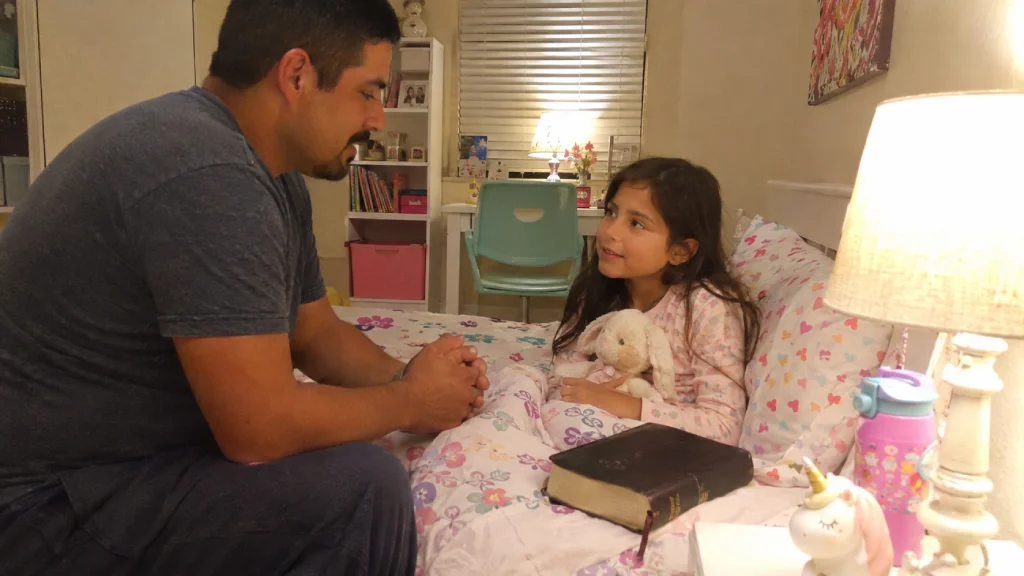
Being a Christian father involves far more than keeping food on the table, paying the mortgage, driving the kids to soccer practice, and making sure everybody gets to church on Sunday. Those things can certainly be part of responsible fatherhood, but God has entrusted fathers with something much bigger. We are raising human beings who will one day stand before Him, and for a relatively brief season of their lives, we have an enormous amount of influence over what they believe, how they understand the world, and what they think Christianity actually looks like when it is lived out.
That reality should humble every dad. None of us fathers does this perfectly. I certainly haven’t. Every father can look back and identify conversations he mishandled, opportunities he missed, times he was too harsh, moments when work received too much attention, or seasons when he should have been more intentional spiritually. The point of examining ourselves is not to wallow in regret. It is to repent where necessary, thank God for His grace, and become more faithful with whatever years of fatherhood He still gives us.
Paul tells fathers in Ephesians 6:4, “Fathers, do not provoke your children to anger, but bring them up in the discipline and instruction of the Lord.” That is a tremendous responsibility. Here are twenty questions every Christian father should periodically ask himself.
1. Do My Children Know That I Love Jesus Christ?
Your children should know that Christianity is more than something Dad checks off on Sunday morning. They should see genuine, daily evidence that Christ is precious to you. They should hear you talk about Him naturally, watch you pray, see you reading Scripture, and recognize that your decisions are shaped by what God has said.
Deuteronomy 6 describes God’s Word being taught to children throughout ordinary life: “when you sit in your house, and when you walk by the way, and when you lie down, and when you rise.” Biblical discipleship belongs in the normal rhythms of the home.
2. Do My Children See Me Reading the Bible?
Telling your children that Scripture is important while rarely opening it yourself sends a mixed message. You do not need to stage elaborate family Bible studies every evening, but your kids should eventually understand that God’s Word has an important place in your personal life.
A worn Bible in Dad’s hands can preach a sermon without saying a word.
3. Do I Pray With My Children?
It is good to pray for your children privately, but they should also hear you pray with them. Pray before meals, before school, during difficult circumstances, after good news, when they are afraid, and when important decisions arise.
Prayer teaches children that Dad does not believe he is self-sufficient. He needs God, trusts God, and brings the concerns of the family before Him.
4. Does My Wife Feel That We Are Parenting Together?
A man can technically be “present” in the home while leaving most of the actual parenting to his wife. She knows the schedules, manages discipline, handles school problems, remembers appointments, knows what the children are struggling with, and carries most of the emotional and spiritual burden.
Christian fatherhood requires involvement. Ask your wife whether she feels like she has a partner or merely an assistant who occasionally steps in when requested.
This is not just a good parenting tip, but a great marriage tip as well!
5. Am I Leading My Family or Merely Reacting to Problems?
Some fathers only become involved when something goes wrong. A bad grade appears, a child gets in trouble, a teenager breaks a rule, or a serious conflict erupts. Suddenly Dad becomes intensely engaged.
Biblical leadership should be more proactive. Know what is happening in your children’s lives before the crisis arrives. Ask questions and pay attention to things. Create conversations before you desperately need them.
6. Do My Children Feel Safe Talking to Me?
Authority does not require emotional distance. Your children should respect you, but they should not be terrified to tell you the truth.
If your son confesses a serious mistake, does your reaction make honesty easier next time or more frightening? If your daughter brings you a difficult question, does she receive thoughtful guidance or immediate irritation? James tells us to be “quick to hear, slow to speak, slow to anger” (James 1:19). Fathers need that wisdom constantly.
7. Do I Discipline in Anger?
Biblical discipline is meant to correct and train. Angry punishment can easily become Dad venting his frustration. Children can usually tell the difference.
If you are furious, it may be wise to settle yourself before addressing the problem. Discipline should communicate, “I love you too much to allow this behavior to continue,” rather than, “You made me angry, so now I am going to make you pay.”
8. Am I Expecting Behavior Without Reaching the Heart?
Christian parenting can easily become behavior management. Do this. Don’t do that. Say thank you. Stop fighting. Clean your room. Get better grades.
Those things may have value, but Christianity goes deeper than outward compliance. Jesus repeatedly addressed the heart because actions flow from what is happening inside us. Fathers should help children understand why lying, selfishness, disrespect, envy, sexual sin, anger, and pride matter before God.
We want obedient children, but ultimately we want children who know and love Christ.
9. Have My Children Seen Me Repent?
Your children already know you are imperfect. Trying to pretend otherwise will not fool them in the slightest.
When you sin against them, tell them plainly. “I was wrong. I lost my temper. I spoke to you in a way that dishonored God. Will you forgive me?”
A father who repents teaches his children something enormously valuable about the gospel. Christian authority does not place Dad above confession.
10. Am I More Concerned About Their Success or Their Holiness?
Most fathers want their children to succeed, and there is nothing wrong with encouraging education, hard work, skill development, and responsible careers. In fact, overall, we as fathers should do more to love, push, and encourage our kids to learn these things.
But problems arise when worldly success becomes more important than godliness.
Would you rather have a son twenty-five years from now earning $200,000 a year who barely follows Christ or a son earning an ordinary wage who loves Jesus, serves his church, and faithfully leads his family?
Your own priorities will eventually communicate the answer.
11. Am I Teaching My Children How to Work?
Work existed before the Fall of Man in Eden. God placed Adam in the garden “to work it and keep it” (Genesis 2:15). Children should gradually learn that responsibility is a good part of adult life.
Give them age-appropriate chores. Let them experience the satisfaction of completing difficult tasks. Teach them to show up when they said they would, finish what they start, and serve people without expecting applause.
You are preparing them for adulthood, not preserving childhood forever.
12. Am I Preparing My Children to Leave Me?
Healthy parenting ultimately works toward independence. Genesis 2:24 describes a man leaving his father and mother and holding fast to his wife.
Your children are not supposed to remain dependent upon you forever. Teach them how to handle money, make decisions, deal with consequences, solve problems, interact respectfully with adults, and eventually establish households of their own.
Good fathers gradually transfer responsibility.
13. Do My Children See Me Love Their Mother?
One of the most powerful lessons your children receive about marriage comes from watching yours.
Your sons are observing how you speak to your wife. Your daughters are learning what they may someday expect from a husband. They notice affection, respect, irritation, sarcasm, forgiveness, tenderness, and conflict.
Ephesians 5:25 commands, “Husbands, love your wives, as Christ loved the church and gave himself up for her.” Your children should see evidence of that sacrificial love.
14. Am I Giving My Family My Presence or Only My Provision?
Providing financially for your family is honorable and biblical, but money cannot replace a father.
A man can work sixty hours a week “for his family” while barely knowing his family. Work can become an extremely respectable excuse for absence.
Your children will remember that you provided, but they will also remember whether you attended the game, sat beside them when they were hurting, listened when they wanted to talk, and made room in your schedule for them.
15. Does My Phone Get More Attention Than My Children?
Many fathers are physically near their children while mentally somewhere else.
A child begins telling a story while Dad scrolls on this phone. A teenager asks a question while Dad checks the latest video reels and stories. Dinner is interrupted repeatedly by notifications.
Technology is useful, but children should not have to compete constantly with a screen for their father’s eyes. There are moments when putting your phone in another room is one of the simplest ways to communicate, “You have my attention.” So learn to put your phone down.
16. Am I Teaching My Children How to Handle Failure?
Your children will lose games, receive disappointing grades, get rejected, make bad mistakes, experience broken friendships, and eventually face much more serious disappointments.
Do not raise children who believe life is supposed to go their way.
Teach them that failure can expose weakness without defining their identity. Help them examine mistakes, accept responsibility, repent where necessary, learn, and keep moving forward under God’s providence. Romans 8:28 remains true even when circumstances hurt.
17. Am I Preparing Them to Face a World That Rejects Christianity?
Your children are growing up in a culture that increasingly challenges basic Christian beliefs about God, sexuality, marriage, human identity, truth, and authority.
They need more than rules. They need reasons.
Teach them why Christianity is true. Talk about difficult cultural questions before someone else answers them first. Encourage questions rather than treating every doubt as rebellion. 1 Peter 3:15 tells believers to be prepared to give a defense for the hope within them. Fathers should help prepare their children to do exactly that.
18. Am I Modeling Faithful Church Membership?
Children learn how seriously to take the local church partly by watching their parents.
If church is the first commitment dropped whenever something more entertaining appears, they will notice. If Dad constantly criticizes pastors, complains about other members, and treats church participation as optional, they will notice that too.
Let them see you worship, serve, give, encourage people, submit to biblical leadership, and build genuine relationships within the body of Christ. Teach them that Christians belong with other Christians.
19. Do I Know My Children’s Hearts?
You may know your child’s grades, schedule, favorite team, friends, and hobbies while knowing surprisingly little about what is happening inside him.
Ask deeper questions. What worries you? What are you praying about? What do you find difficult about following Christ? What temptations are you facing? What makes you angry? What kinds of struggles are you facing at school? What do you hope your life looks like someday?
Do not interrogate them. Build the kind of relationship in which deeper conversations can develop naturally over time.
20. If My Children Become Like Me, Will I Be Thankful?
This may be the most uncomfortable question on the list.
Imagine your son at age forty possessing your current spiritual habits, attitudes, priorities, marriage patterns, work ethic, church involvement, speech, integrity, and relationship with God. Not your good intentions, but your actual habits.
Would that encourage you?
Imagine your daughter marrying a man who treats her the way you currently treat your wife. Would you be grateful?
Paul could tell believers, “Be imitators of me, as I am of Christ” (1 Corinthians 11:1). Every Christian father should desire to live closely enough to Christ that his children can safely imitate what they see.
That does not require perfection. It requires direction.
Fatherhood Goes Faster Than You Think
When your children are small, fatherhood can seem endless. There are diapers, sleepless nights, tantrums, school projects, sports practice, doctor’s appointments, discipline problems, and a thousand ordinary responsibilities. Then somehow the toddler becomes a teenager, the teenager gets a driver’s license, and before long you are standing in a driveway watching that child leave home. Believe me, time can go quickly.
You get a remarkably short window to be Dad in the way you are Dad right now. Use it well, brother.
Teach your children God’s Word while they are still sitting at your table. Pray with them while they are still sleeping under your roof. Tell them about Christ. Listen when they talk. Discipline them with love. Apologize when you fail. Love their mother faithfully. Bring them into the life of the church, and allow them to see that following Jesus Christ reaches into every corner of your life.
You will make mistakes. Every father does. Your children’s salvation ultimately rests in the sovereign grace of God rather than the perfection of your parenting, and that should keep us humble and prayerful. Yet God’s sovereignty never gives fathers permission to become passive. He has entrusted these children to us for a season and called us to raise them “in the discipline and instruction of the Lord” (Ephesians 6:4).
So ask the difficult questions while there is still time to change some of the answers.